 Dineora


 Restaurant
 Location
 Cuisine
 Designed by Dineora
A Korean restaurant in Custom House
Kimchi Lab is a Korean restaurant in London, set in the Custom House district. Its cooking is Korean and halal, and its menu runs through the whole repertoire of everyday Korean food: starters such as edamame, kimmari or mandu with vegetables and chicken, tteok-bokki, those rice cakes simmered in a spicy gochujang sauce, Korean barbecue with LA galbi, marinated then grilled short ribs, or marinated pork.
Next come the soups and stews, from sundubu jjigae with silken tofu to galbitang and jjampong, the bibimbaps, the bento boxes, Korean fried chicken in several sauces, japchae, stir-fried udon, kimchi fried rice, plain, with cheese or with seafood, and drinks such as sikhye, a fermented rice drink. The name states the place’s approach, which the website takes literally: “Korean flavor experiments”.

The challenge: a laboratory, not a museum
 The challenge: a laboratory, not a museum
Korean cuisine has its classics, and Kimchi Lab serves them; but its name also promises boldness. The website had to hold both ends: reassure those who come looking for a bibimbap or fried chicken, and convey the energy of a place that presents itself as a laboratory.
It also had to organize a broad menu, about ten sections and many variations, for different uses: dining in, takeout, delivery. The website answers by showing the menu twice, as a large board on the home page and as a detailed ordering page, and by keeping the order button in view at all times.
Art direction in slate and brushstrokes
 Art direction in slate and brushstrokes
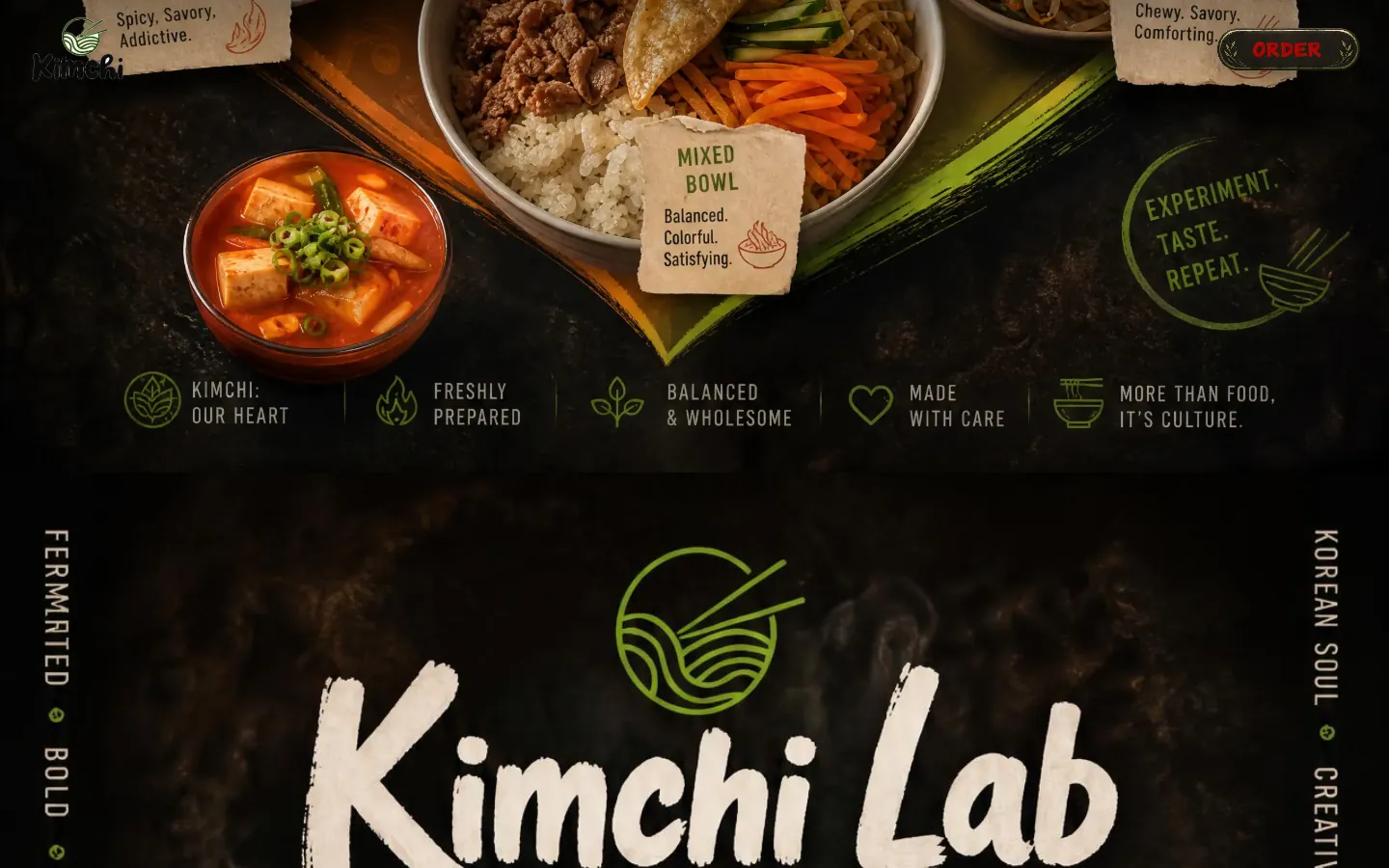
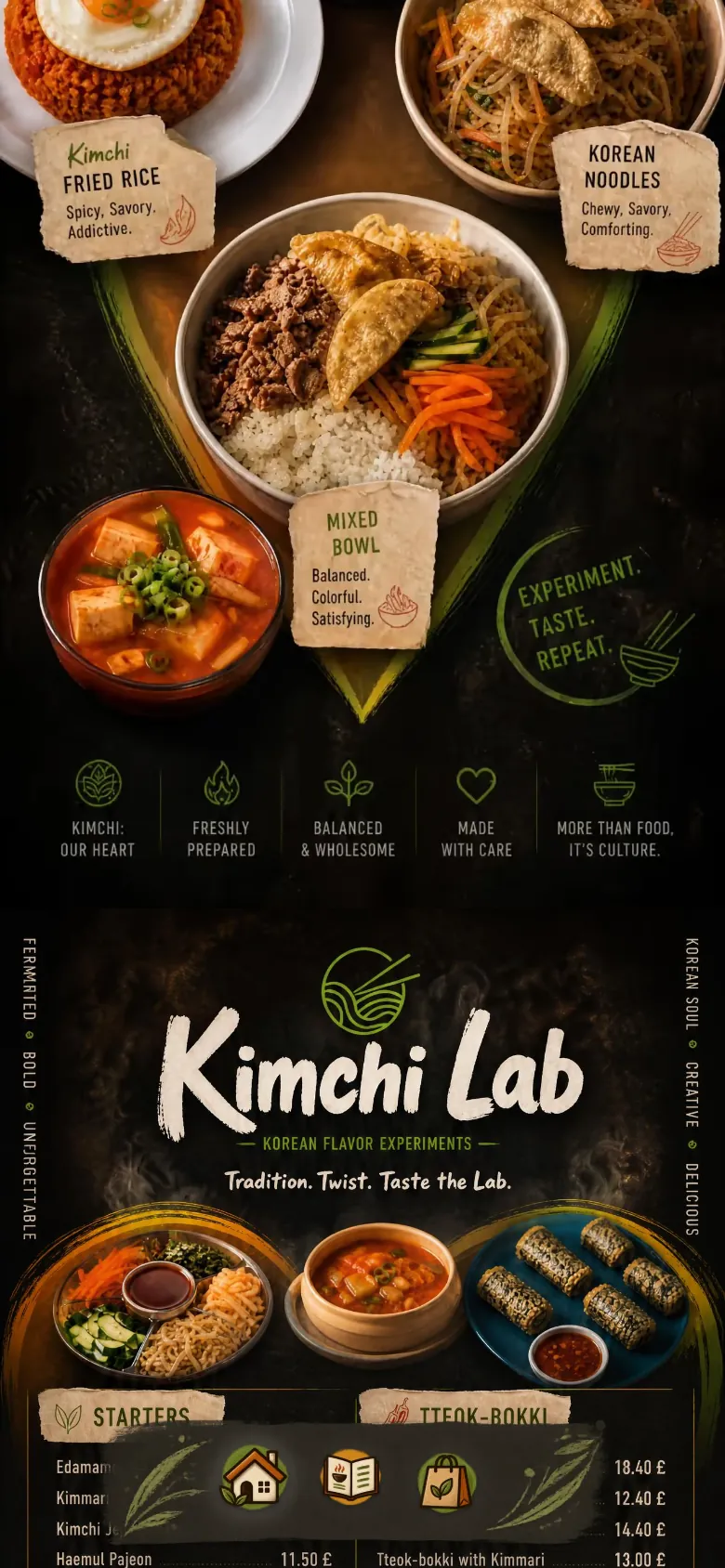
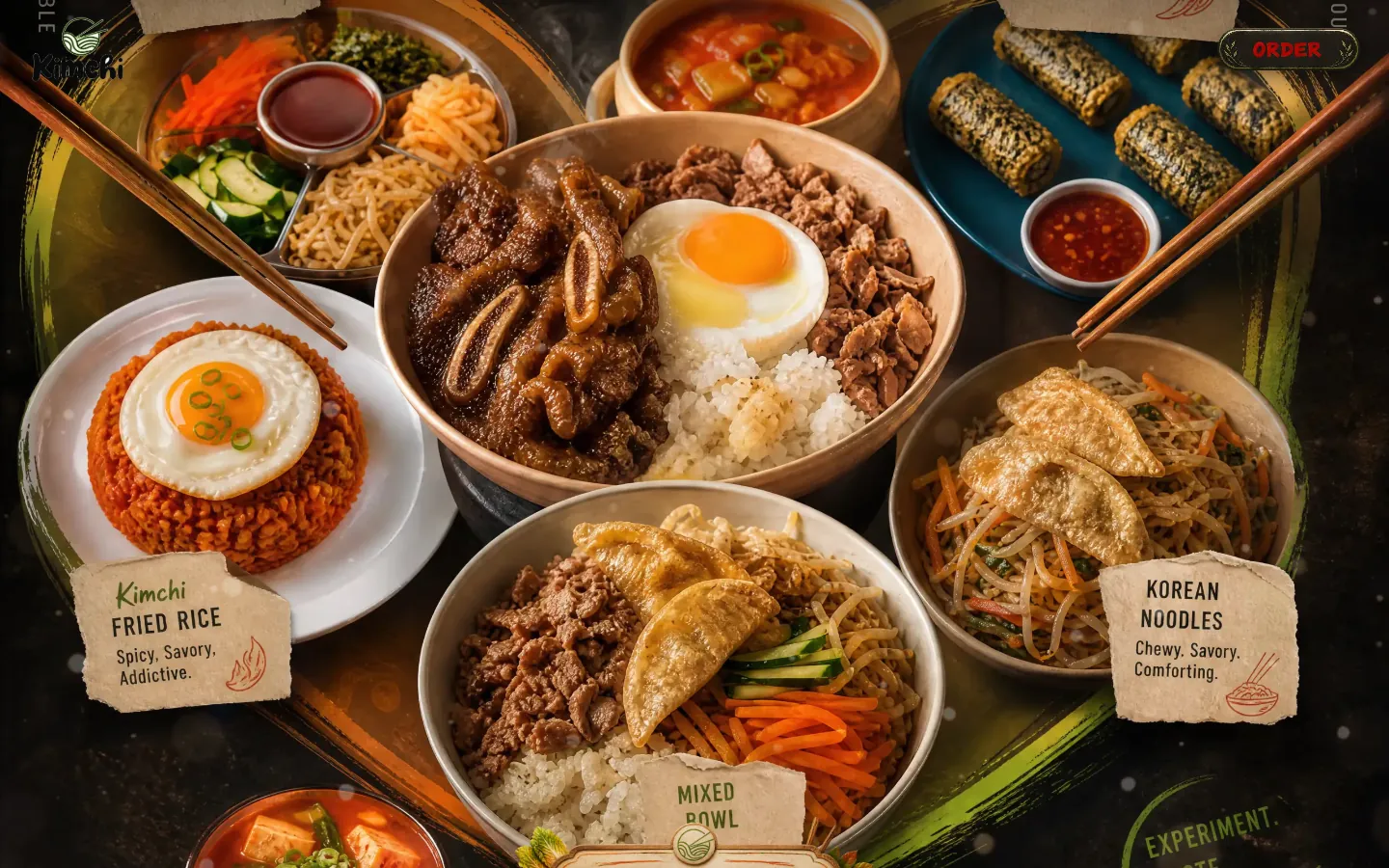
The background is black like smoked slate, crossed by green and orange brushstrokes. The green of the logo, a bowl drawn in a single stroke with its chopsticks and waves of noodles, returns in the pictograms and taglines; chili red marks the menu headings. Labels of torn kraft paper, placed on the dishes, give the website its look of a notebook of experiments: “Spicy, Savory, Addictive” for the kimchi fried rice, “Chewy, Savory, Comforting” for the noodles.
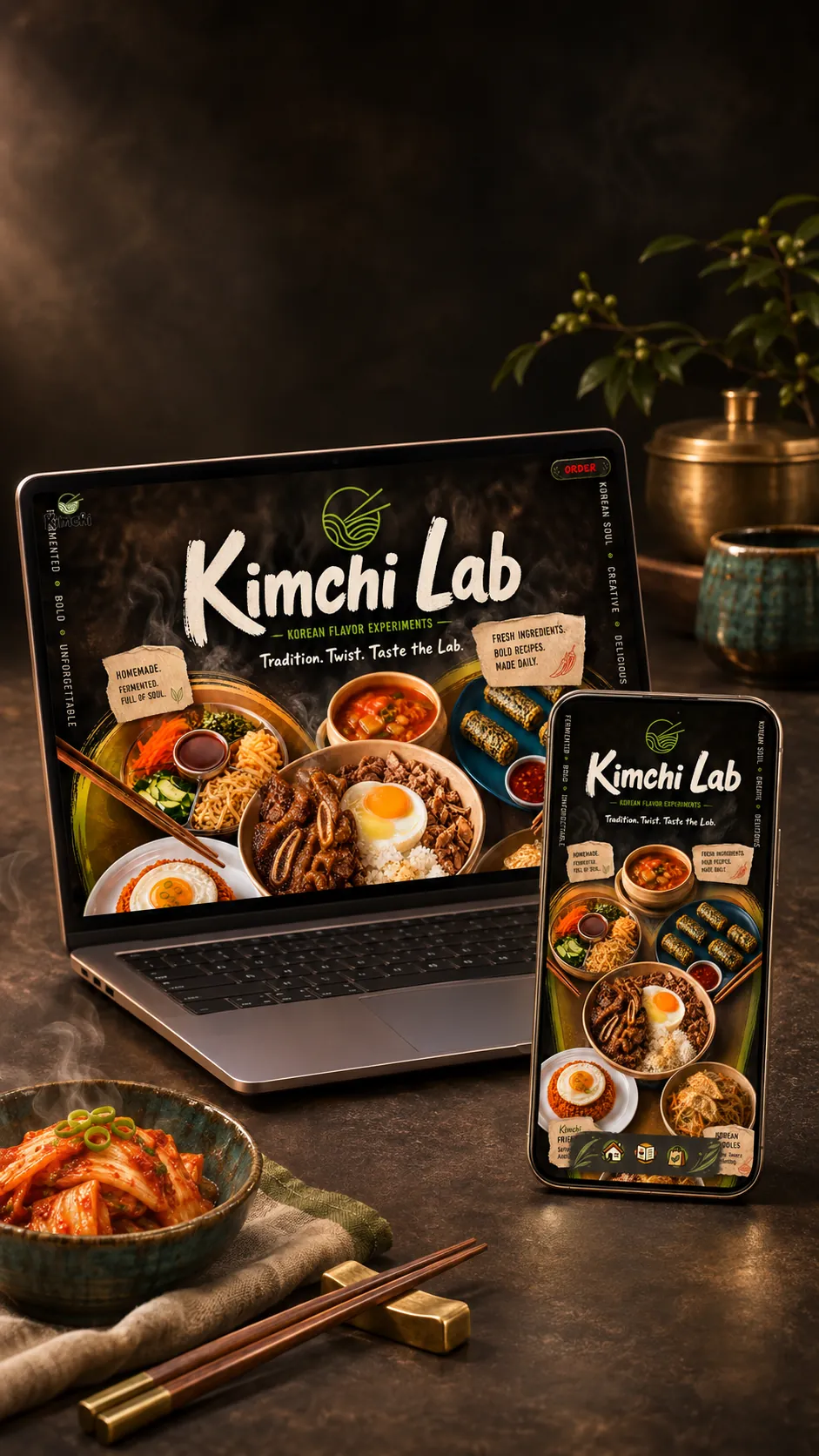
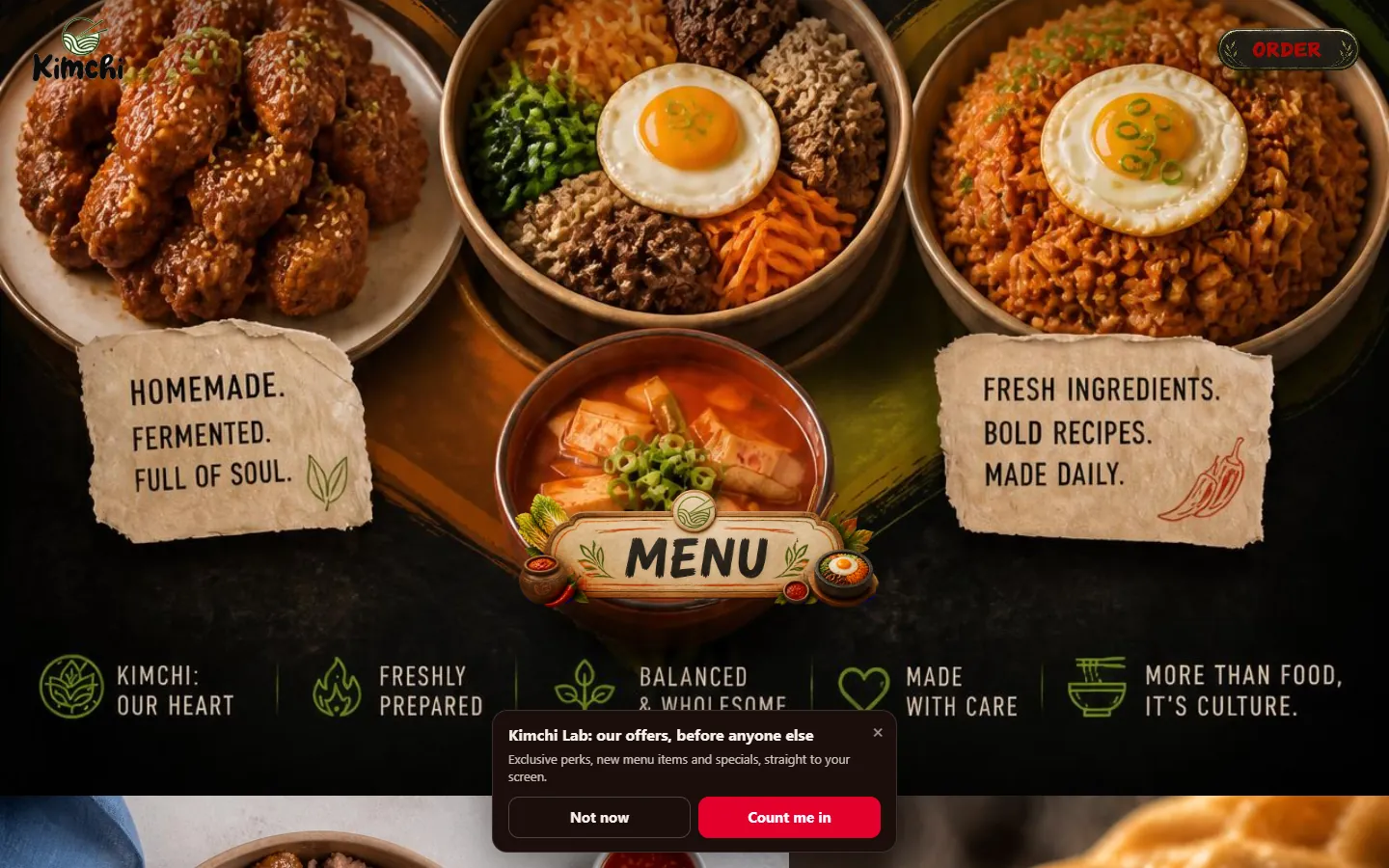
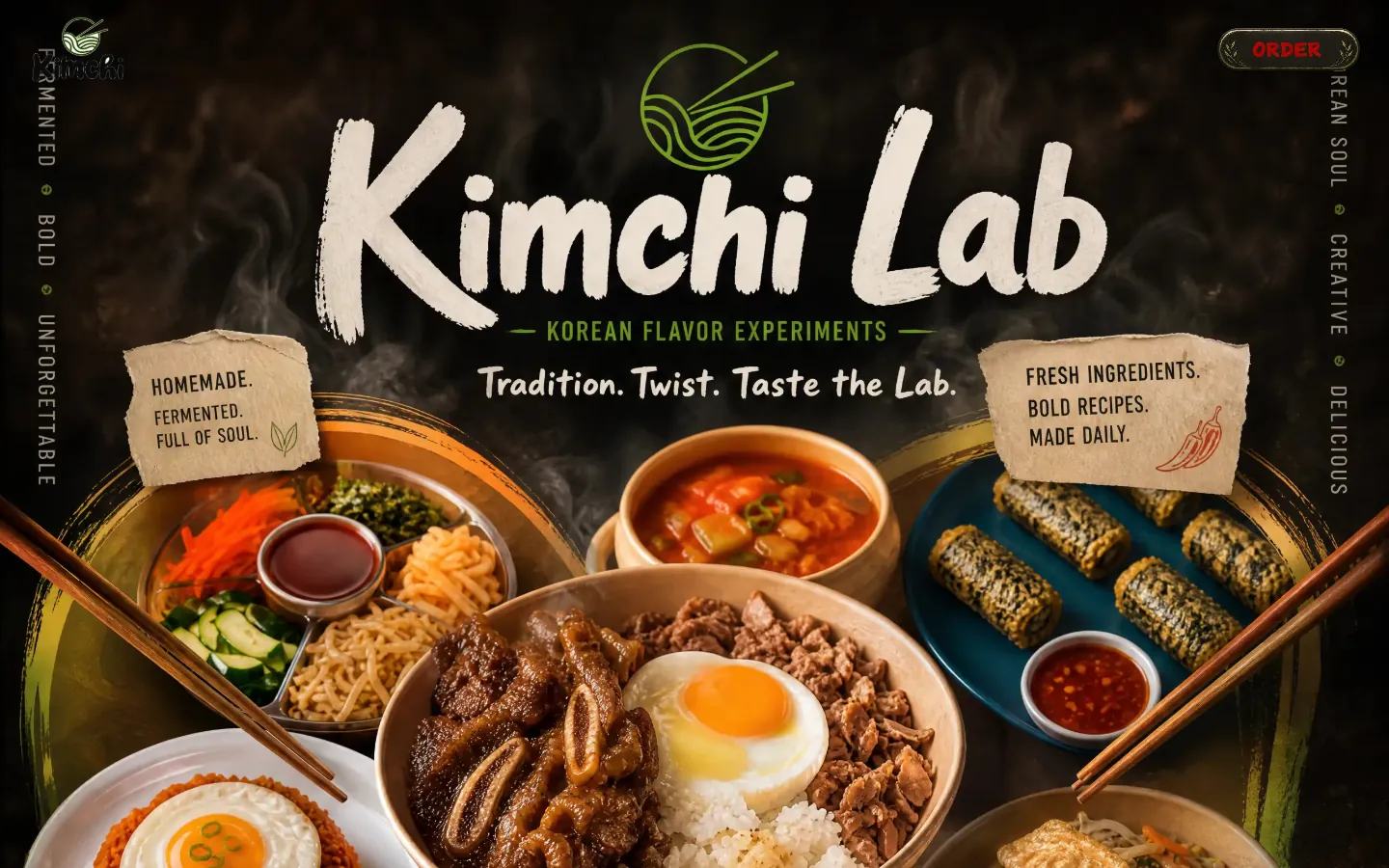
The visuals show the dishes seen from above, packed together as on a shared table: glazed beef ribs and a fried egg on a bed of rice, red tofu stew, fried seaweed rolls, a platter of vegetables and side dishes, sesame fried chicken. The large headings are written in a typeface drawn after the letters of the logo, with a brush stroke, and the Order button, dark with red lettering, stays at the top right of the screen.
A home page that reads like a poster
 A home page that reads like a poster
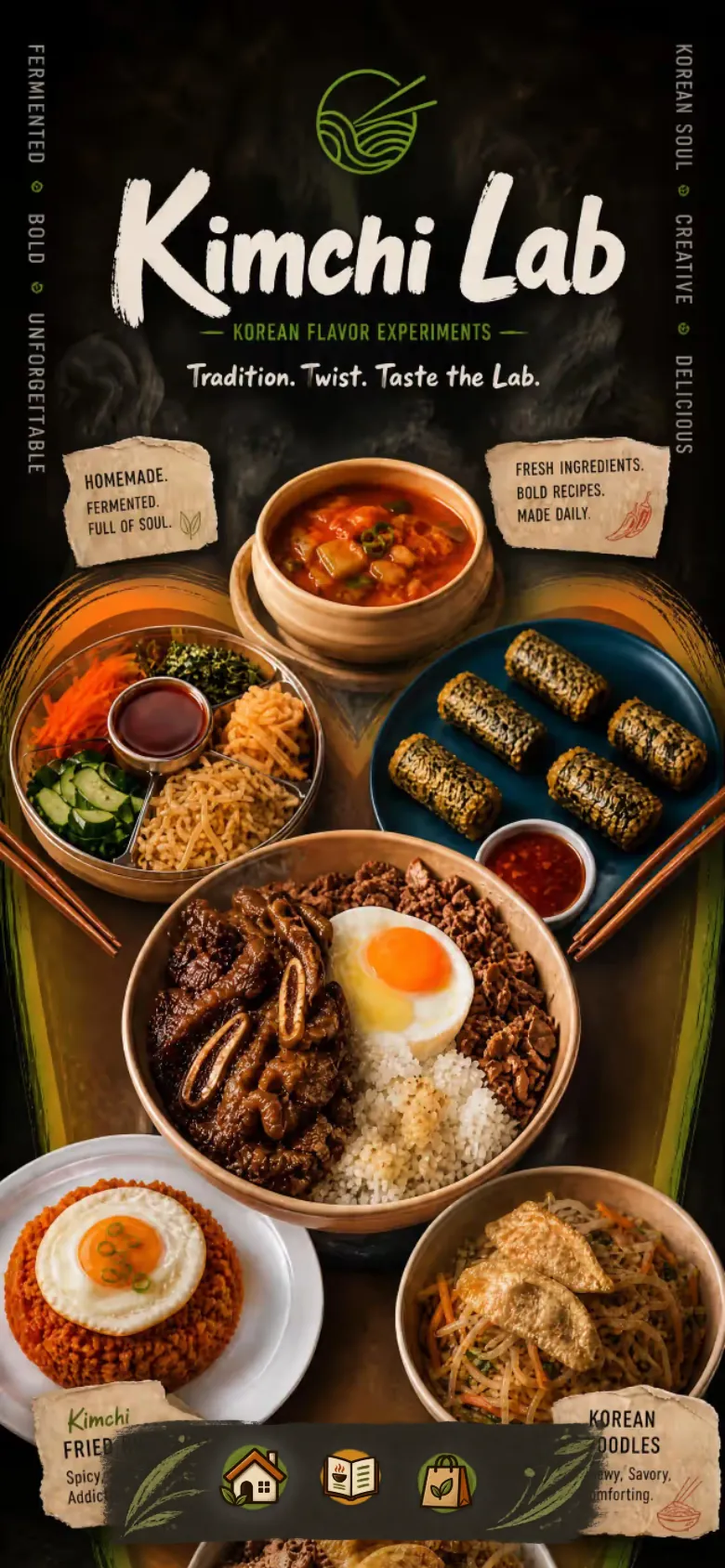
The home page reads like a large poster. The name sprawls in brush lettering under the logo, followed by “Korean flavor experiments” and a three-beat motto: “Tradition. Twist. Taste the Lab.” On the sides, words written vertically frame an array of dishes laid over a broad streak of color.
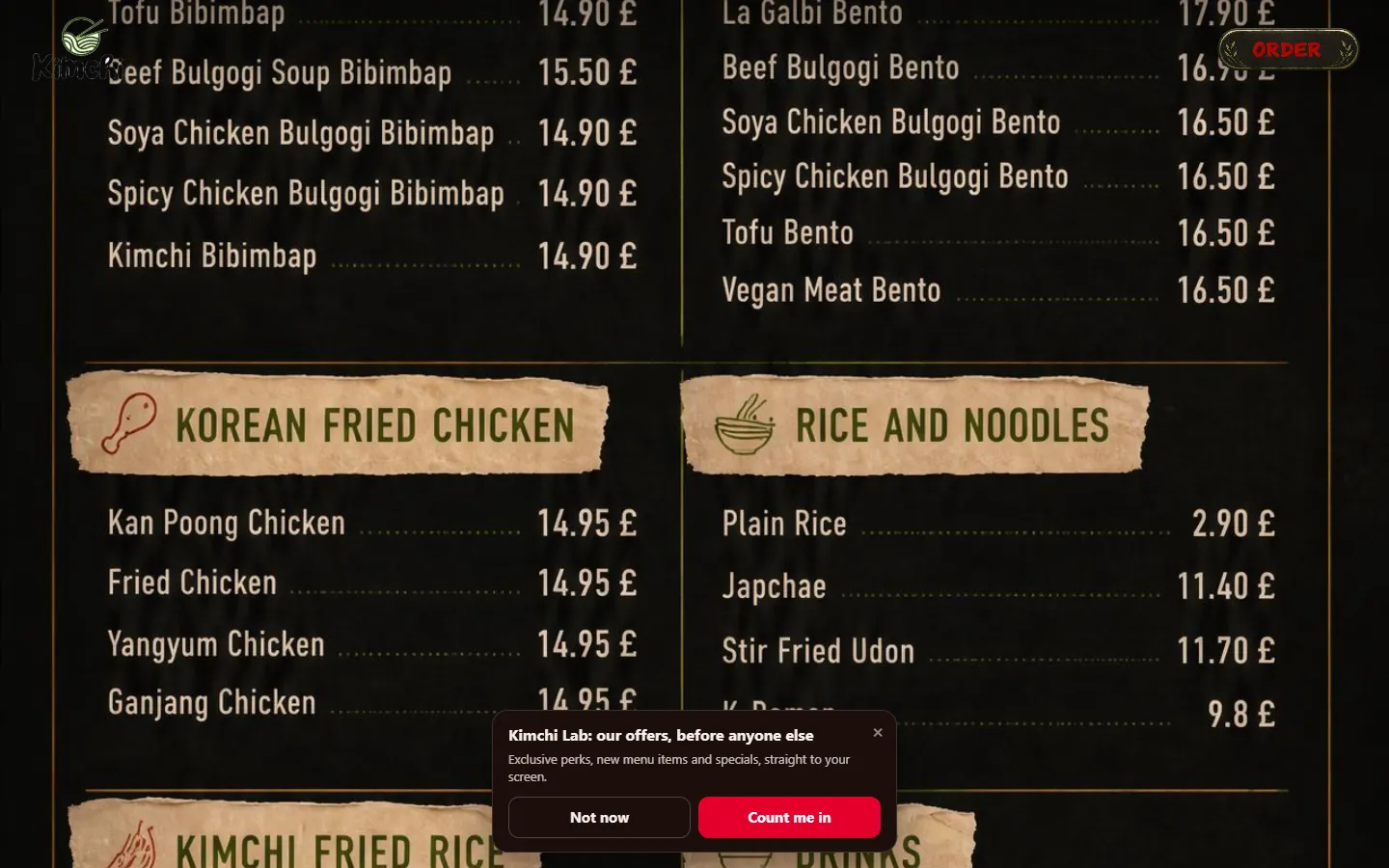
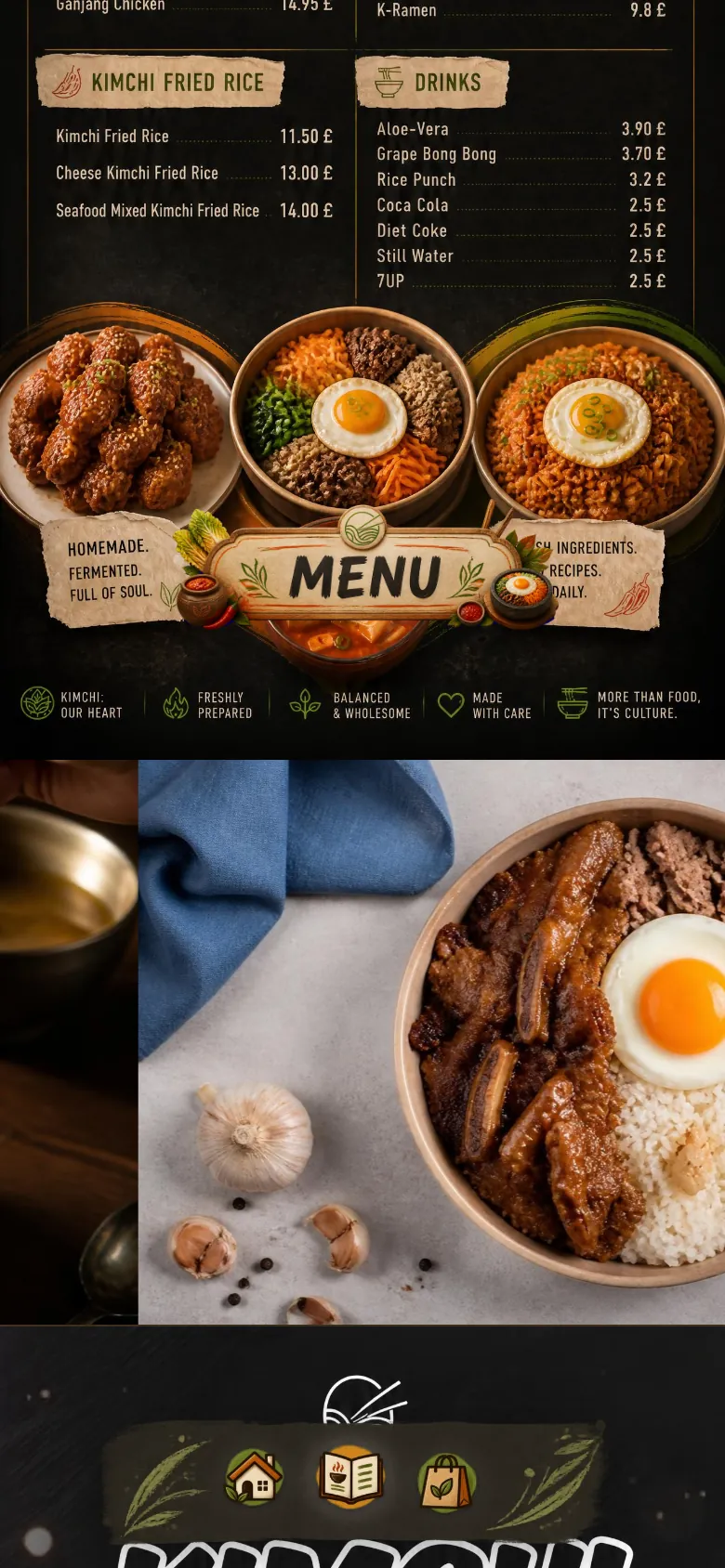
Scrolling down, the torn labels introduce each plate, a green stamp repeats “Experiment. Taste. Repeat.”, then a banner of five pictograms sums up the spirit of the place, from “Kimchi: our heart” to “More than food, it’s culture.” The home page then displays the entire menu as a large blackboard, section by section, with its kraft paper headers, then a “Menu” sign set on a steaming stew, among fried chicken, bibimbap and kimchi rice.
An ordering page of parchment cards
 An ordering page of parchment cards
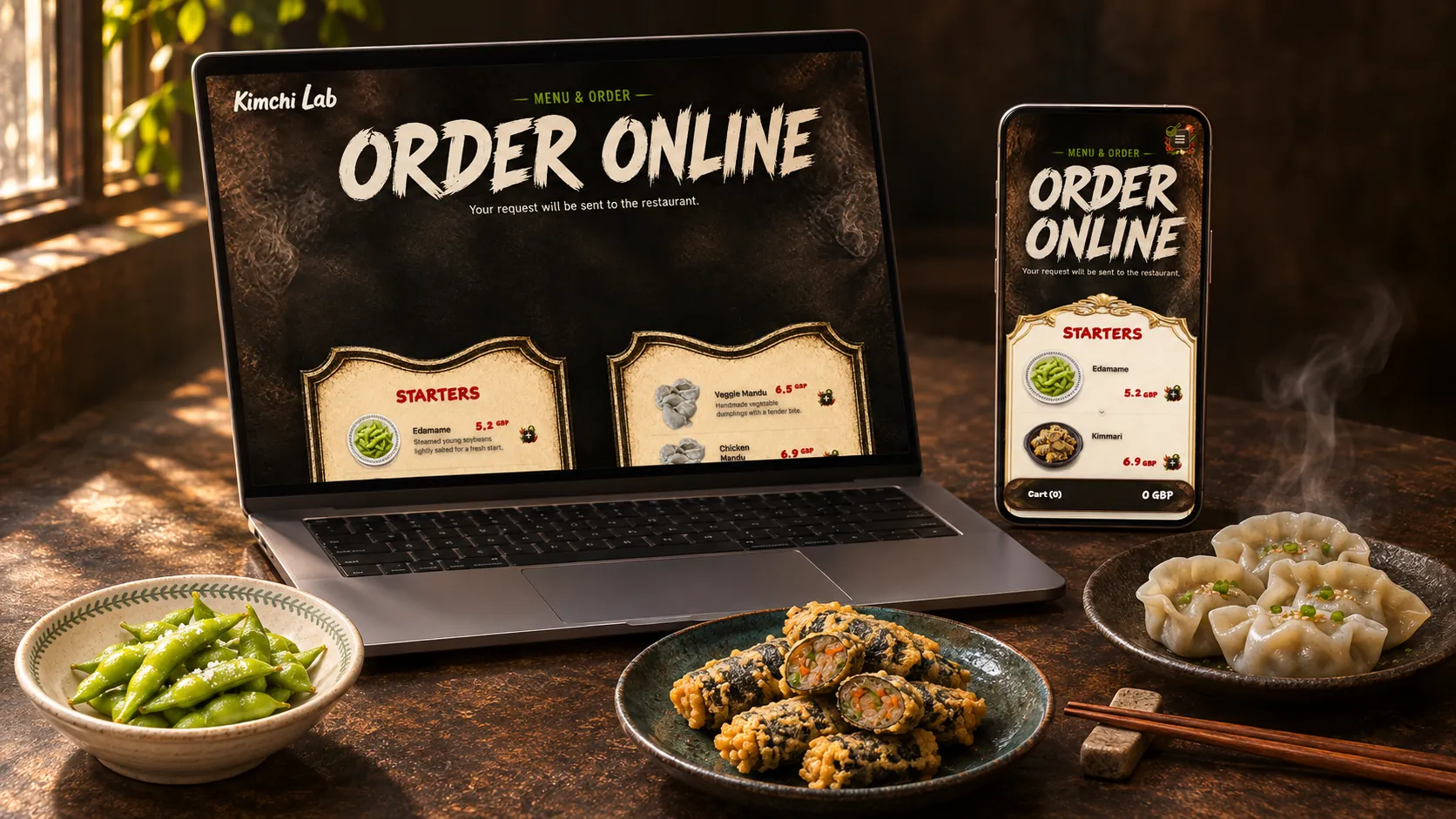
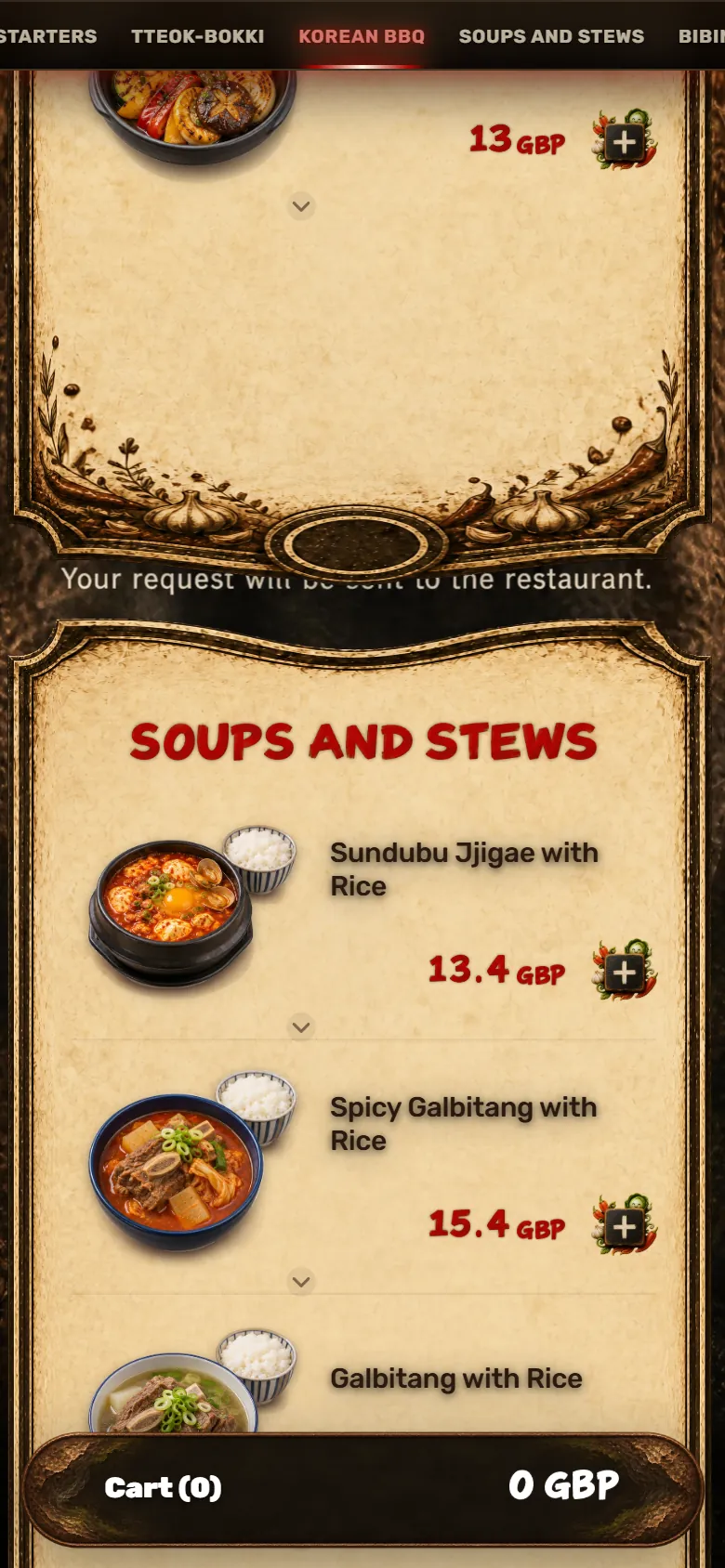
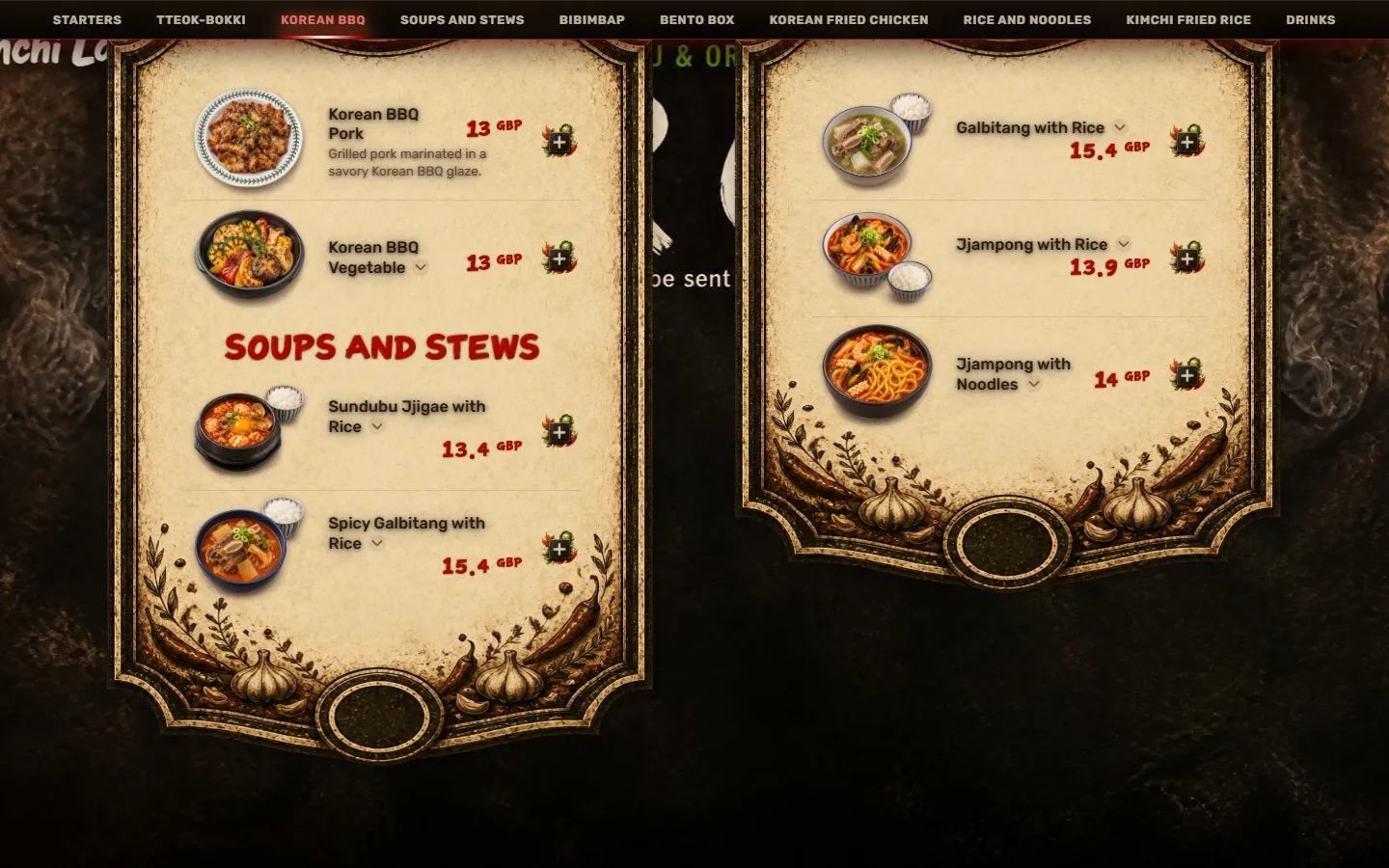
The ordering page opens on a brush-drawn title, “Order online”, and a simple note: the request is passed on to the restaurant. On a dark, smoky background, each section sits in an aged parchment card with a dark wooden frame, its lower edge garnished with heads of garlic, chilies and herbs.
Each dish appears with its visual, its name, its price and a short description that unfolds with a tap. A bar at the top of the page leads straight to the sections, from starters to drinks by way of Korean barbecue, stews and fried chicken. You fill your basket, choose pickup at the restaurant or delivery, and payment can be made online.
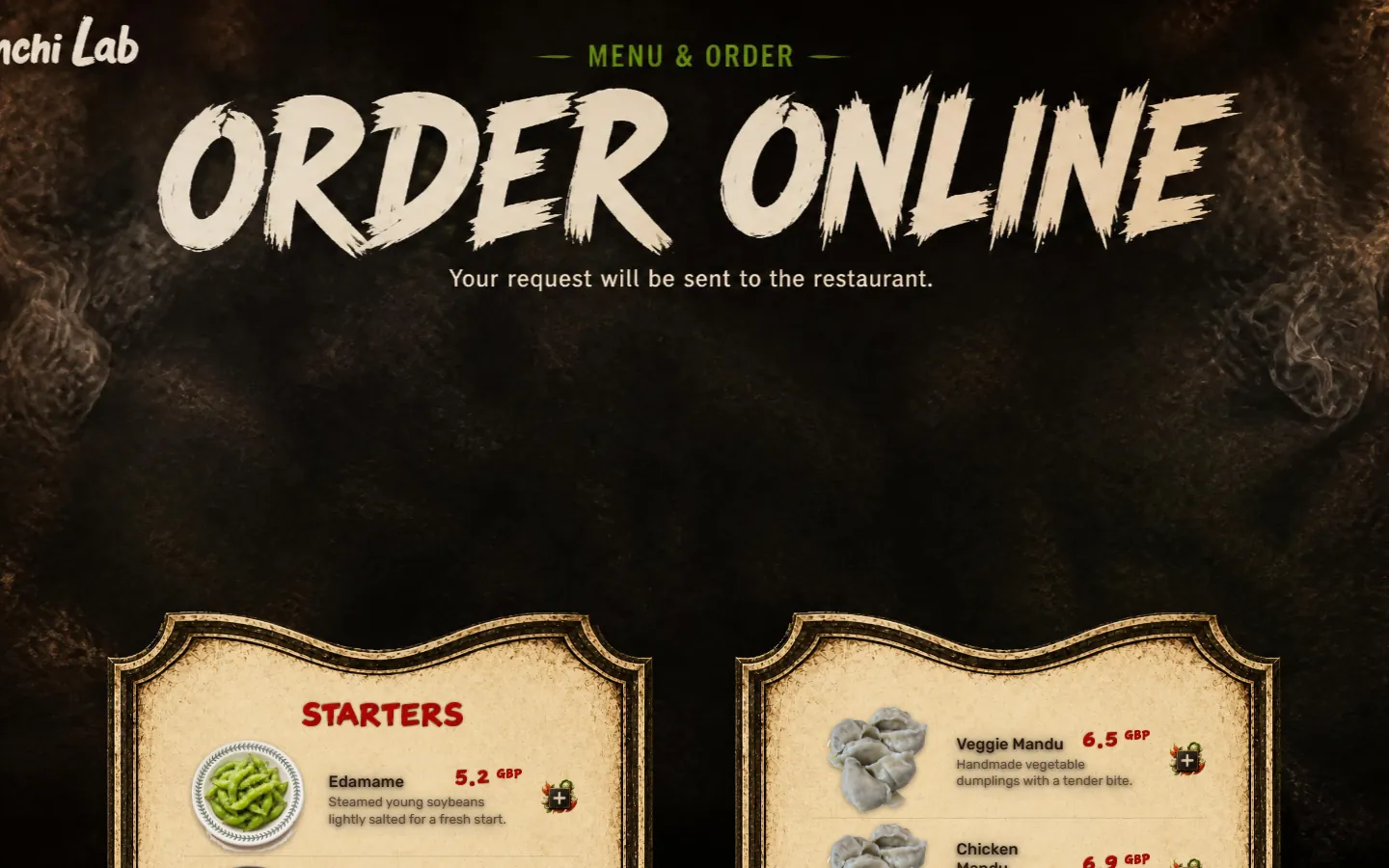
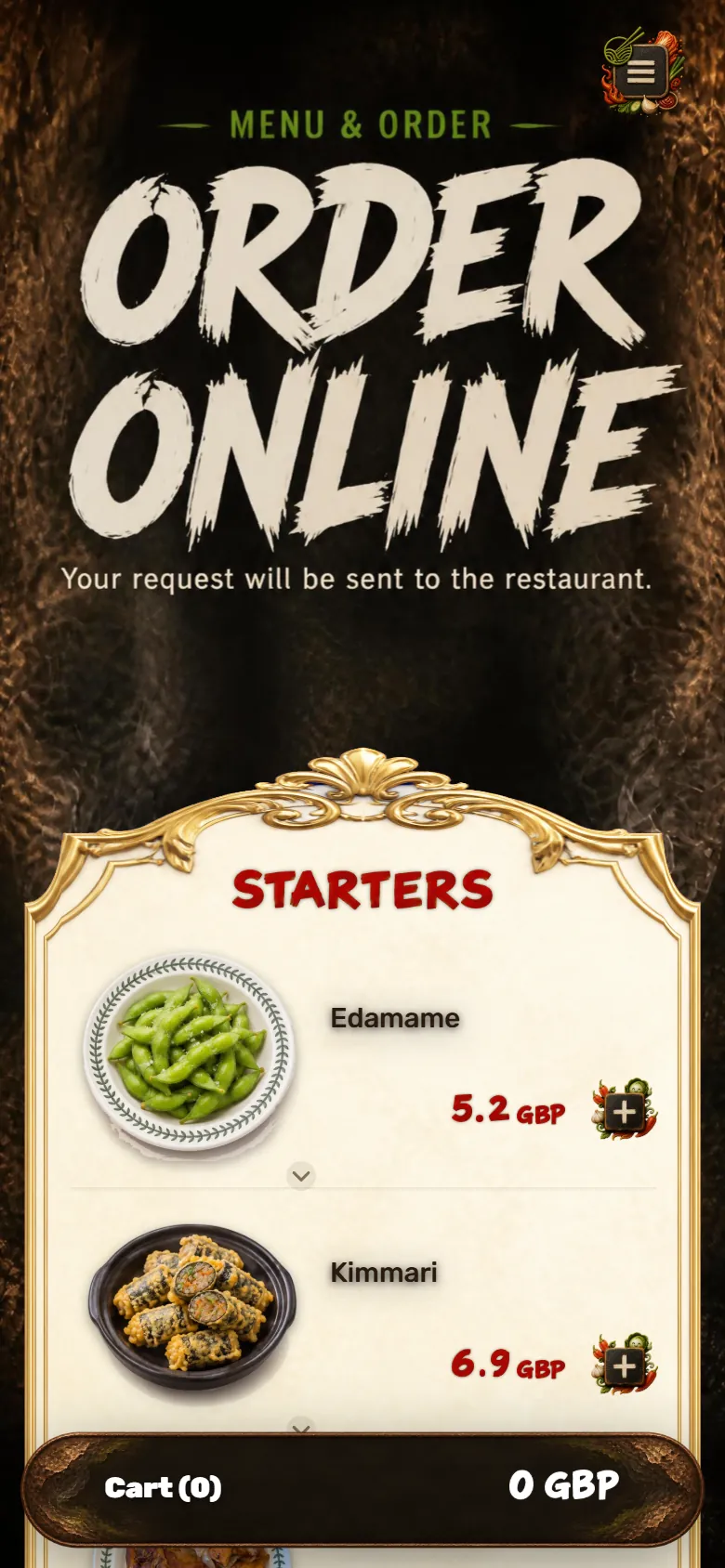
Kimchi Lab's menu: a few dishes
 Kimchi Lab's menu: a few dishes
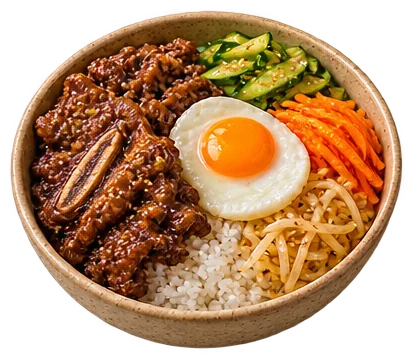
Dishes as they appear on Kimchi Lab's online menu, with the restaurant's own names, descriptions and prices.
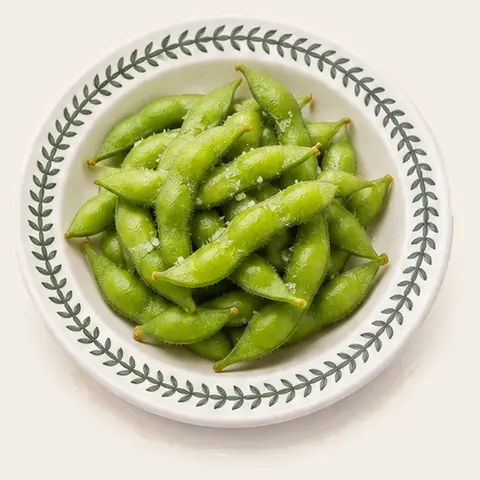 Starters
Edamame
Steamed young soybeans lightly salted for a fresh start.
£5.20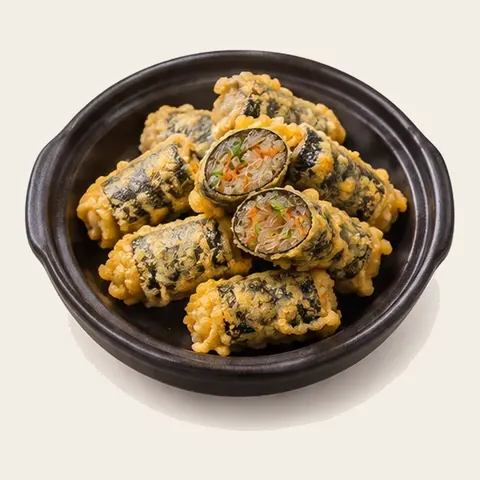 Starters
Kimmari
Crispy seaweed rice rolls, perfect bite-sized snacks.
£6.90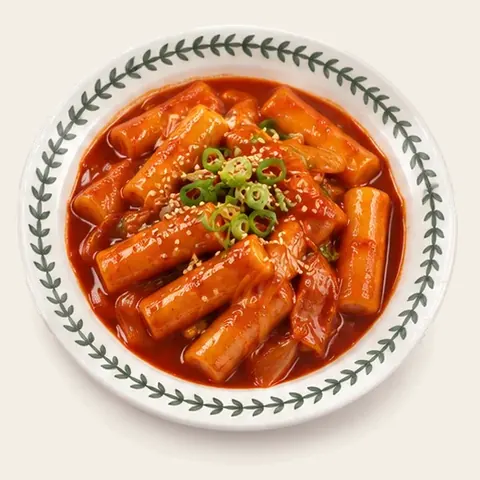 Tteok-Bokki
Chewy rice cakes simmered in a spicy gochujang sauce.
£11.50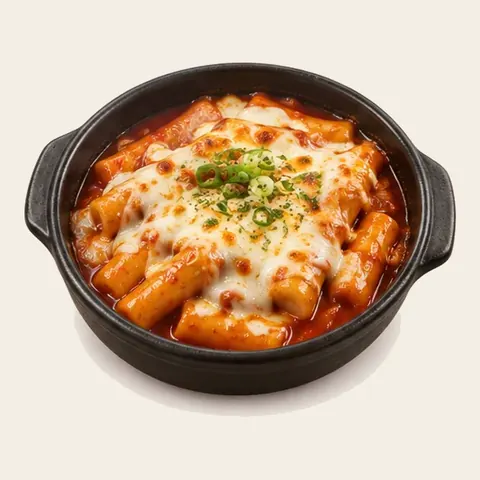 Tteok-Bokki
Cheese Tteok-Bokki
Spicy rice cakes topped with melted mozzarella cheese.
£12.40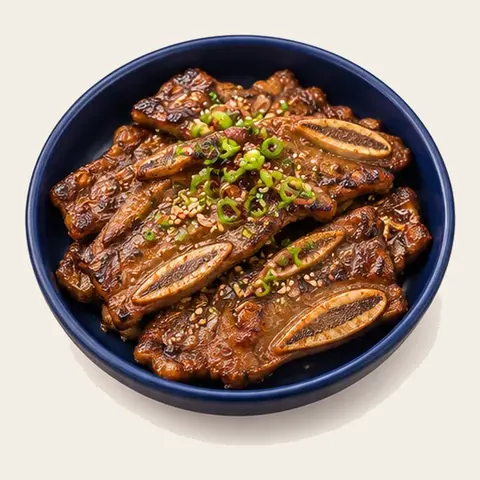 Korean BBQ
 with LA Galbi
LA-style short ribs, marinated and grilled until tender.
£15.30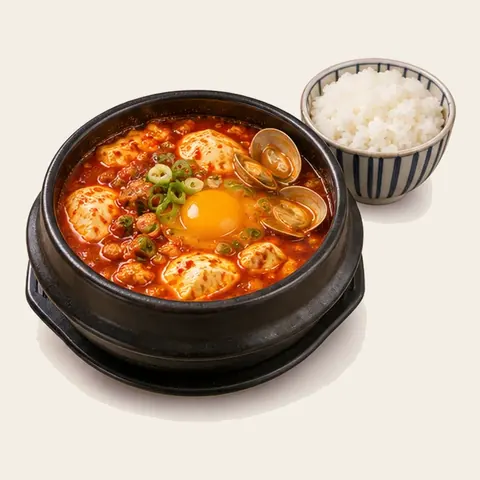 Soups and Stews
Sundubu Jjigae with Rice
Soft silken tofu stew in a spicy broth, served with steamed rice.
£13.40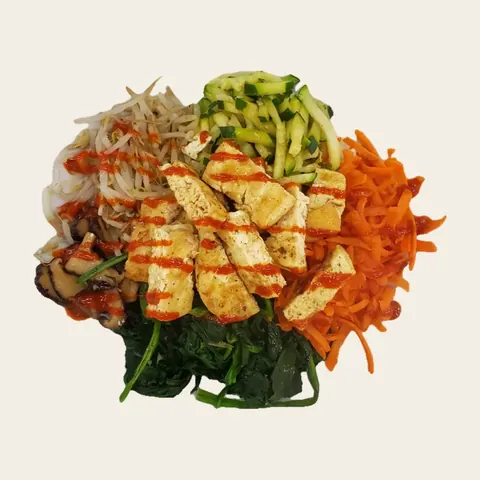 Bibimbap
Tofu Bibimbap
Mixed rice bowl topped with seasoned tofu, vegetables, and gochujang.
£14.90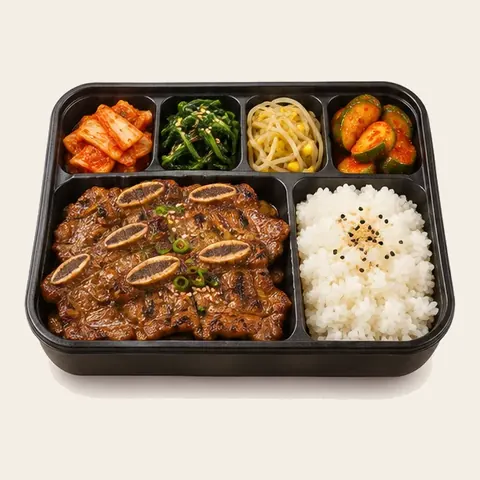 Bento Box
LA Galbi Bento
Bento box featuring LA-style marinated short ribs with sides.
£17.90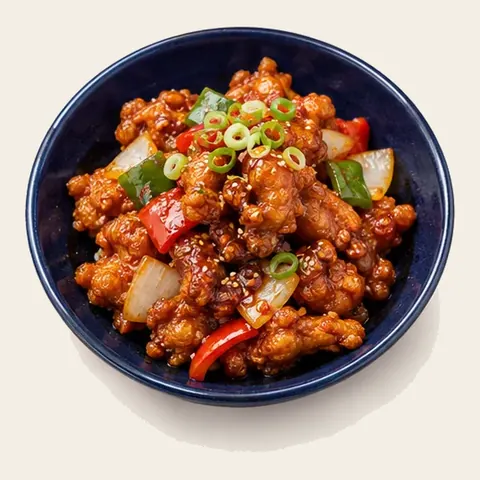 Korean Fried Chicken
Kan Poong Chicken
Crispy fried chicken tossed in a sweet and spicy sauce with vegetables.
£14.95 Rice and Noodles
Plain Rice
Steamed white rice, perfectly cooked.
£2.90 Kimchi Fried Rice
Wok-fried rice with aged kimchi, vegetables, and a hint of sesame.
£11.50 Drinks
Aloe Vera
Refreshing aloe vera drink with pieces of aloe.
£3.90


Booking in front of a calligraphy wall
 Booking in front of a calligraphy wall
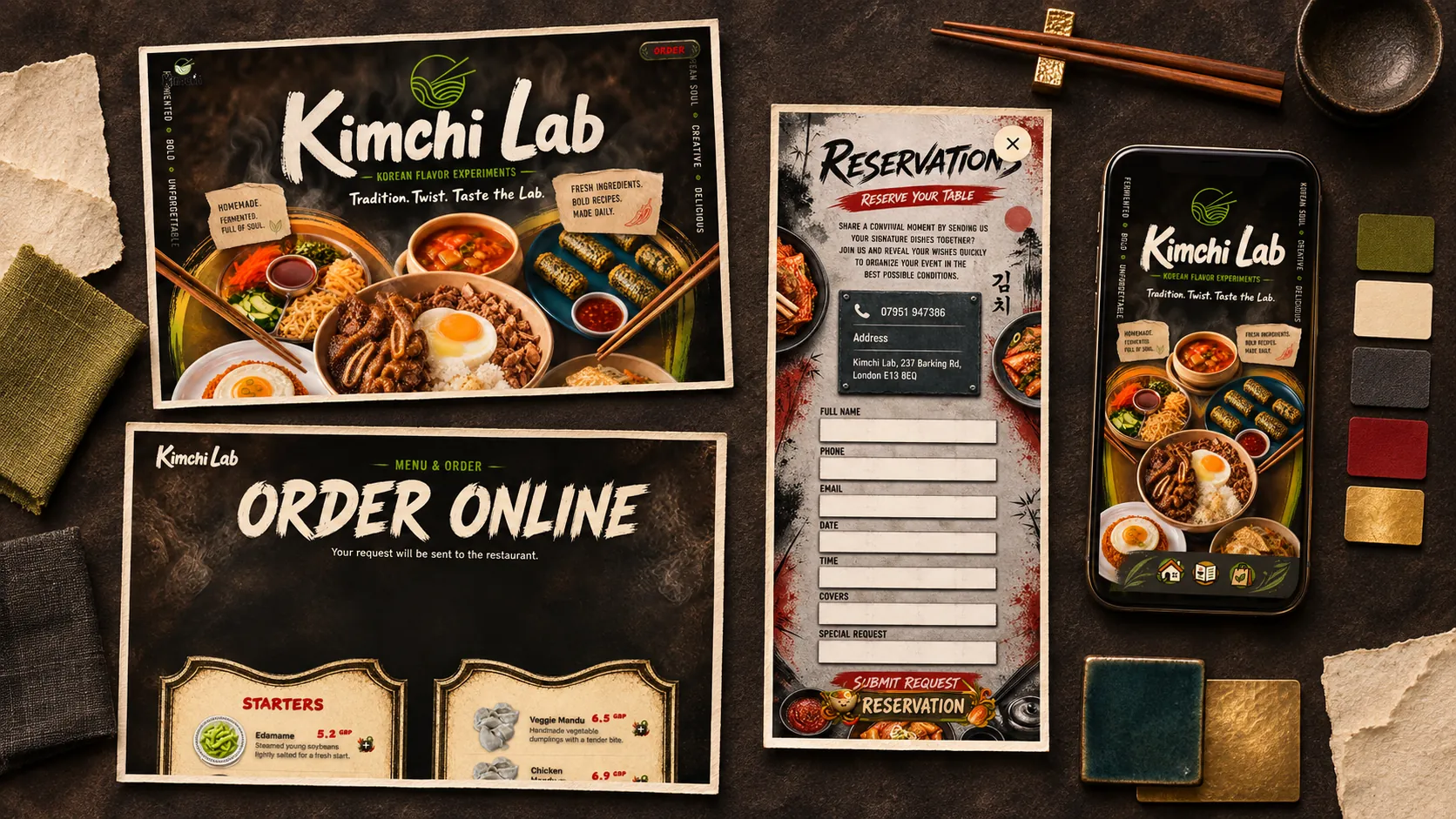
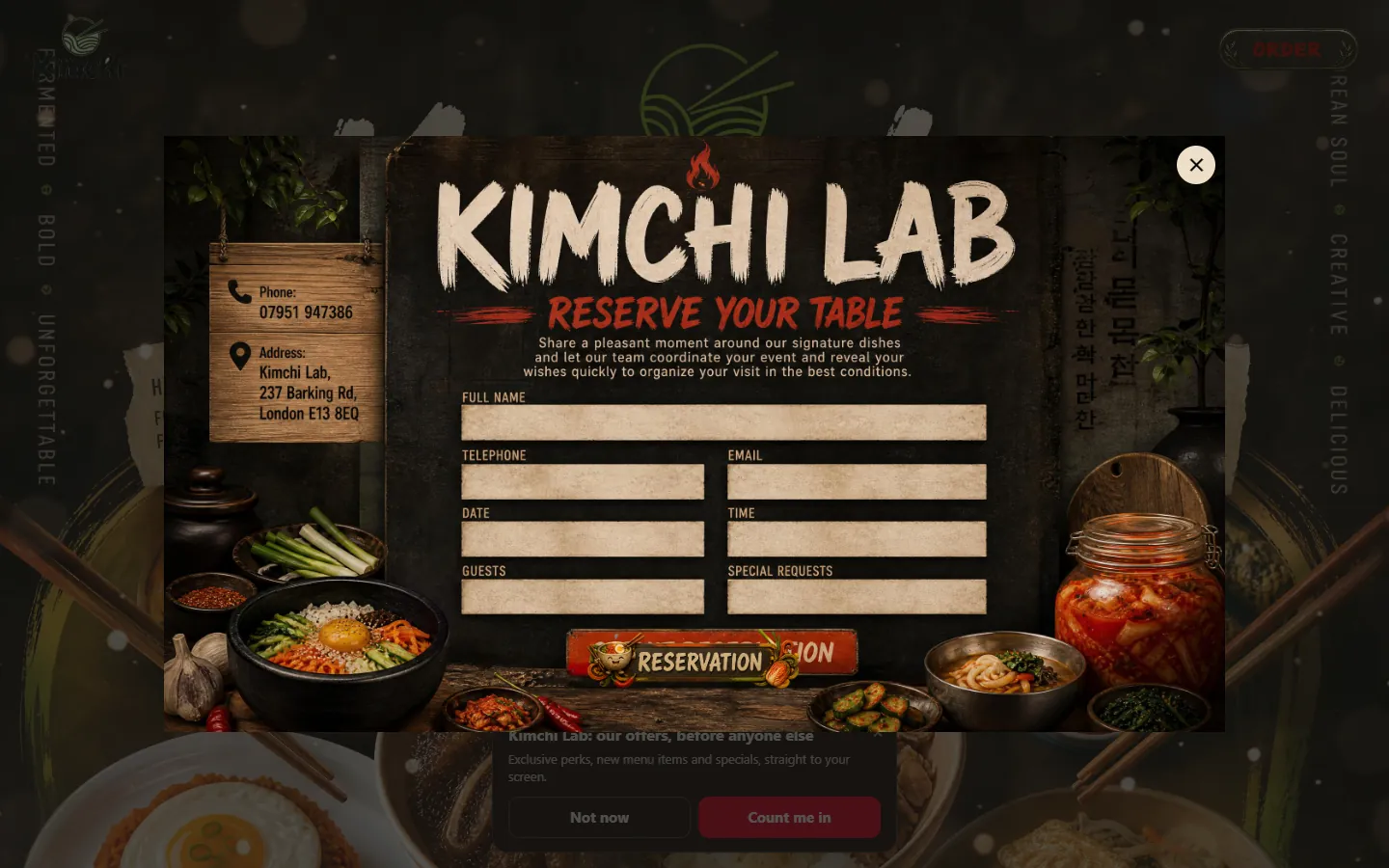
The booking opens in a painted window. On a computer, it is a dark wall covered in Korean calligraphy, with the name of the restaurant in brush lettering, a small flame and the line “Reserve your table” on a red streak. A wooden sign shows the phone number and the address; around the form, a bibimbap in its stone bowl, a jar of kimchi, a noodle soup and spring onions.
The form fits on a single screen and asks for the full name, phone number, email, date, time, number of guests and special requests, in parchment-colored fields. The send button is illustrated with a small bowl of bibimbap.
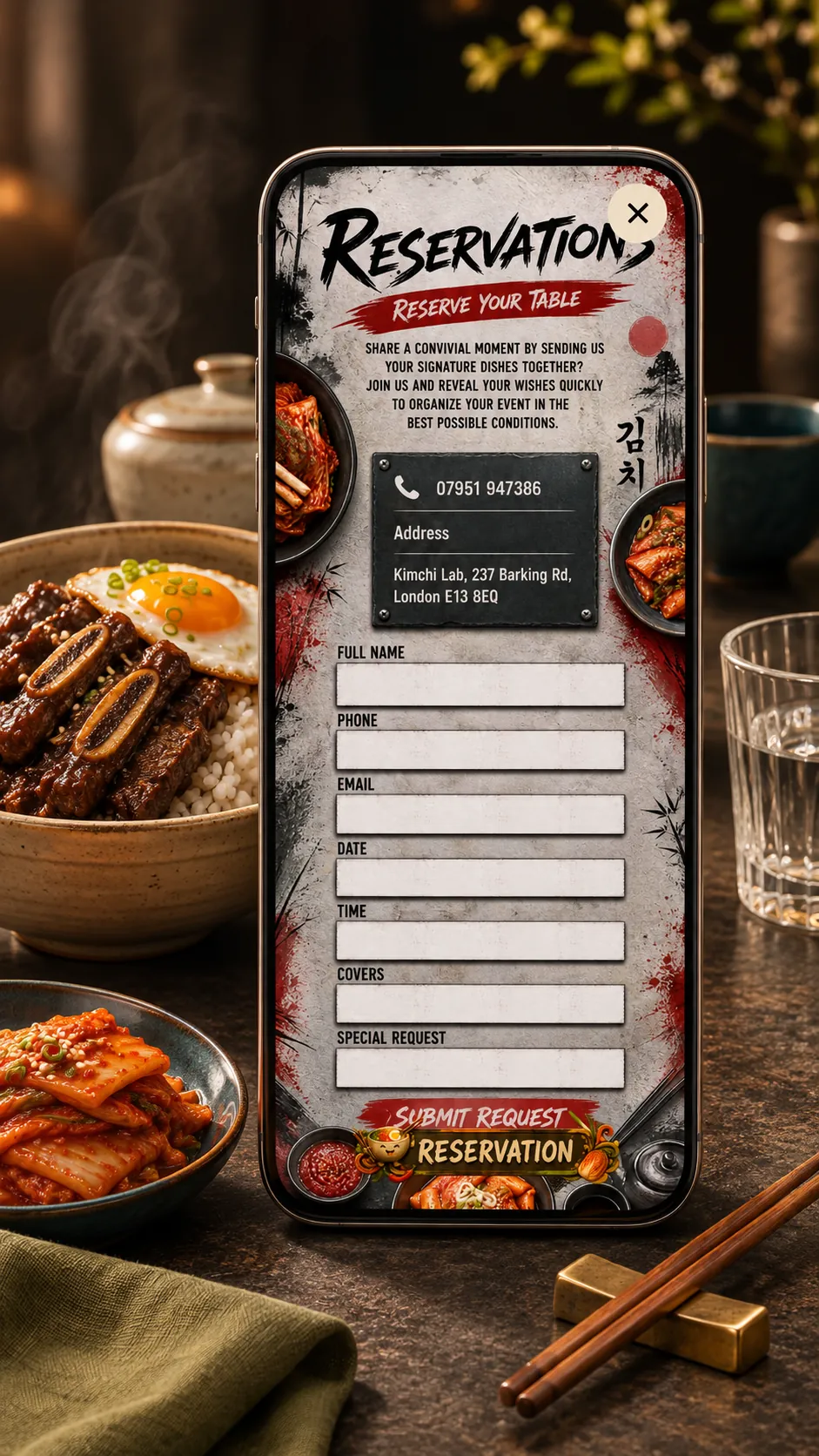
On a phone, the poster in a column
 On a phone, the poster in a column
On a phone, the home page poster is recomposed in portrait: the logo, the name in brush lettering, the motto, then the dishes and their labels, one after the other. A bar fixed at the bottom of the screen gathers three illustrated pictograms, a house, a cookbook and a shopping bag: home, menu, order.
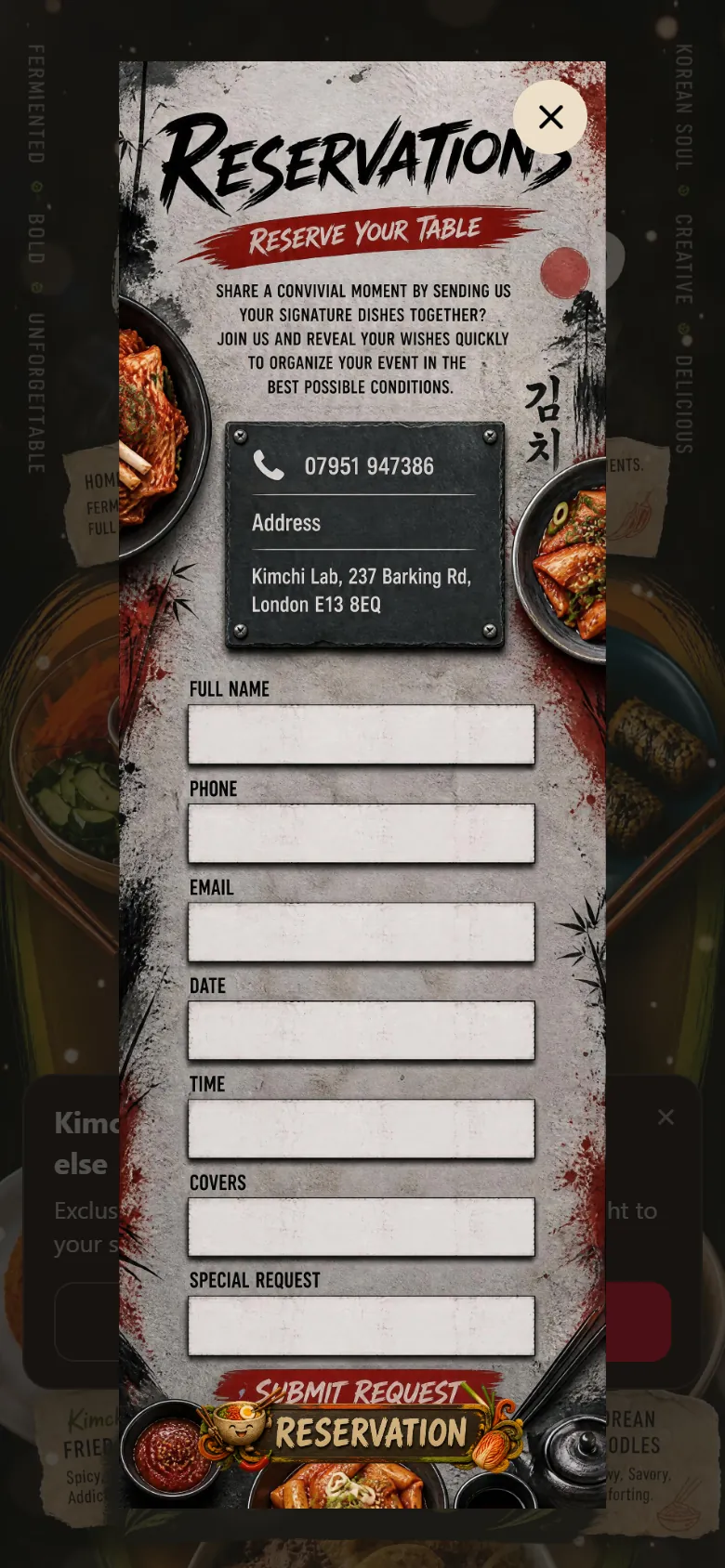
The ordering page keeps its parchment cards, here topped with a golden pediment, with a dark wooden basket bar always visible at the bottom. The booking form adopts another setting, a gray paper splashed with red and black ink, bamboo, the word kimchi written in Korean, and its fields follow one another in a single column.

A website prepared for local searches
 A website prepared for local searches
The website is built around what people look for in this part of London: a Korean restaurant, Korean barbecue, fried chicken, a restaurant near Custom House or in Canning Town, a galbitang, kimchi, or the Kimchi Lab menu. The page title, its description and its texts present the restaurant, its district and its cuisine in English, the language of the website, clearly for visitors and search engines alike.
A detailed presentation page complements the home page, and the full menu can be read as text on the ordering page. No one can promise a place on Google: the work consists of giving search engines accurate, structured and consistent information.
A halal Korean restaurant in London: a website for BBQ, fried chicken and kimchi rice
 A halal Korean restaurant in London: a website for BBQ, fried chicken and kimchi rice
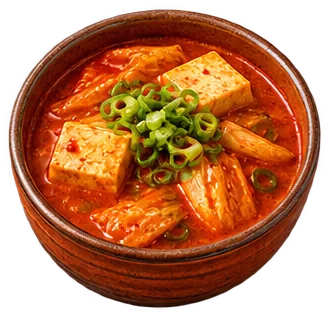
A halal Korean restaurant has to reassure and tempt at once: marinated rib barbecue, bibimbap, bento boxes, Korean fried chicken in several sauces, tteok-bokki, stews and kimchi fried rice. A Korean restaurant website in London must sort that abundance into sections, state that it is halal and allow takeaway or delivery ordering as well as the booking of a group table in Custom House.
- A protocol with no agency fees: no quote, no studio to pay, and no commission on bento boxes or buckets of fried chicken.
- From name to site in minutes: menu, images, ordering and booking pages come out in a single move.
- Black slate, brush strokes, kraft paper: the venue’s notebook of Korean experiments, not an off-the-shelf Asian restaurant skin.
- One recipe changes, so does the page: the cook trials a new jjigae, adds it personally and the site shows it instantly.
- From the grill to the door: orders and tables reach Kimchi Lab, with no delivery app or agency between the gochujang and the customer.
- London, Seoul at heart, Rabat or Sydney: the site speaks several languages and counts in the local currency, handy for a mixed clientele.
For a Korean restaurant or halal street food spot in London, Dineora builds a site that tastes of experiment.
Dineora in numbers: 0% commission on your orders · a website live in 5 minutes.
Learn more: Restaurant website builder · Online ordering system for restaurants · Restaurant booking system · QR code menu for restaurants

The outcome: a website that lives up to its name
 The outcome: a website that lives up to its name
The Kimchi Lab website lives up to its name: a slate background, brushstrokes, scribbled labels and Korean dishes that fill the screen. Behind the poster, the essentials stay simple to find: the full menu, ordering for pickup or delivery, and booking a table.


The website in pictures
 The website in pictures
Screenshots of the live website, on a computer and on a phone.
Kimchi Lab: practical information
 Kimchi Lab: practical information
- Address
- 237 Barking Rd, London E13 8EQ
See the address on Google Maps - Cuisine
- Korean, halal
- Services
- Online ordering for pickup · Delivery · Online table booking · Online payment
- Menu sections
- Starters · Tteok-Bokki · Korean BBQ · Soups and Stews · Bibimbap · Bento Box · Korean Fried Chicken · Rice and Noodles · Kimchi Fried Rice · Drinks
- The restaurant's website
- dineora.io/kimchi-lab-london
 Menu sections

Questions about this project
 Questions about this project

Who designed the Kimchi Lab website?
The Kimchi Lab website was designed by Dineora: art direction, home page, online menu, an ordering page with pickup and delivery, and a booking form.
Can you order from Kimchi Lab online?
Yes. The ordering page presents the whole menu, from the starters to the fried chicken and the drinks: you fill your basket, choose pickup or delivery, and you can pay online.
Can you book a table at Kimchi Lab on its website?
Yes. The booking form fits on a single screen: full name, phone number, email, date, time, number of guests and special requests.
How can a halal Korean restaurant take delivery orders without a third-party app?
Its own site offers delivery and pickup, with the menu and ordering pages. Requests reach the restaurant directly and Dineora takes no commission.
Can a Korean restaurant’s site state it is halal and handle group bookings?
Yes. The restaurateur writes sections and details as they wish, and online booking lands directly with them, with no intermediary.
 Kreyol kitchen
 La Brasserie Acquaviva
 La Casa Latina
 La Ferté Erquelinnes
 La Pie et l’Olive
 La Serenissima
