 Dineora


 Restaurant
 Location
 Cuisine
 Designed by Dineora
A Lebanese table of mezze and manakish
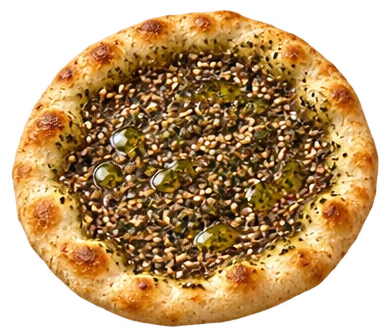
Zaatar w zeit is a Lebanese restaurant in Ivry-sur-Seine, in the Louis-Bertrand – Mirabeau – Sémard district. Its name appears on its menu, in the Lebanese pizzas category: the manakish zaatar, with thyme, olive oil and sesame.
The rest of the menu follows the Lebanese table. The plates combine hummus, moutabal, bulgur, moudardara, tabbouleh and moussaka, with fritters, a dessert, a drink and Lebanese bread; a family mezze is shared among several people. The mezze can also be ordered by the portion: hummus, bulgur, vine leaves, feta cheese, grilled halloumi, garlic cream, chanklish. Then come the sandwiches, such as the falafel with chickpea balls and tahini sauce, the Lebanese pastries, such as the sfiha with minced meat, onions, tomatoes and seven spices, and the cold drinks.

The challenge: conveying the sunshine and the generosity of sharing
 The challenge: conveying the sunshine and the generosity of sharing
Lebanese cuisine is enjoyed with others, around small dishes set in the middle of the table. For Zaatar w zeit, the goal was to convey this generosity and this light before the very first bite, without turning the website into a simple list of dishes.
The menu, which mixes full plates, mezze by the portion, sandwiches and manakish, also had to be made readable, while keeping within reach the two useful actions of the place: ordering takeaway and booking a table. Both buttons stay at the top of the screen, from the home page to the bottom of the page.
Golden stone, olive tree and deep green
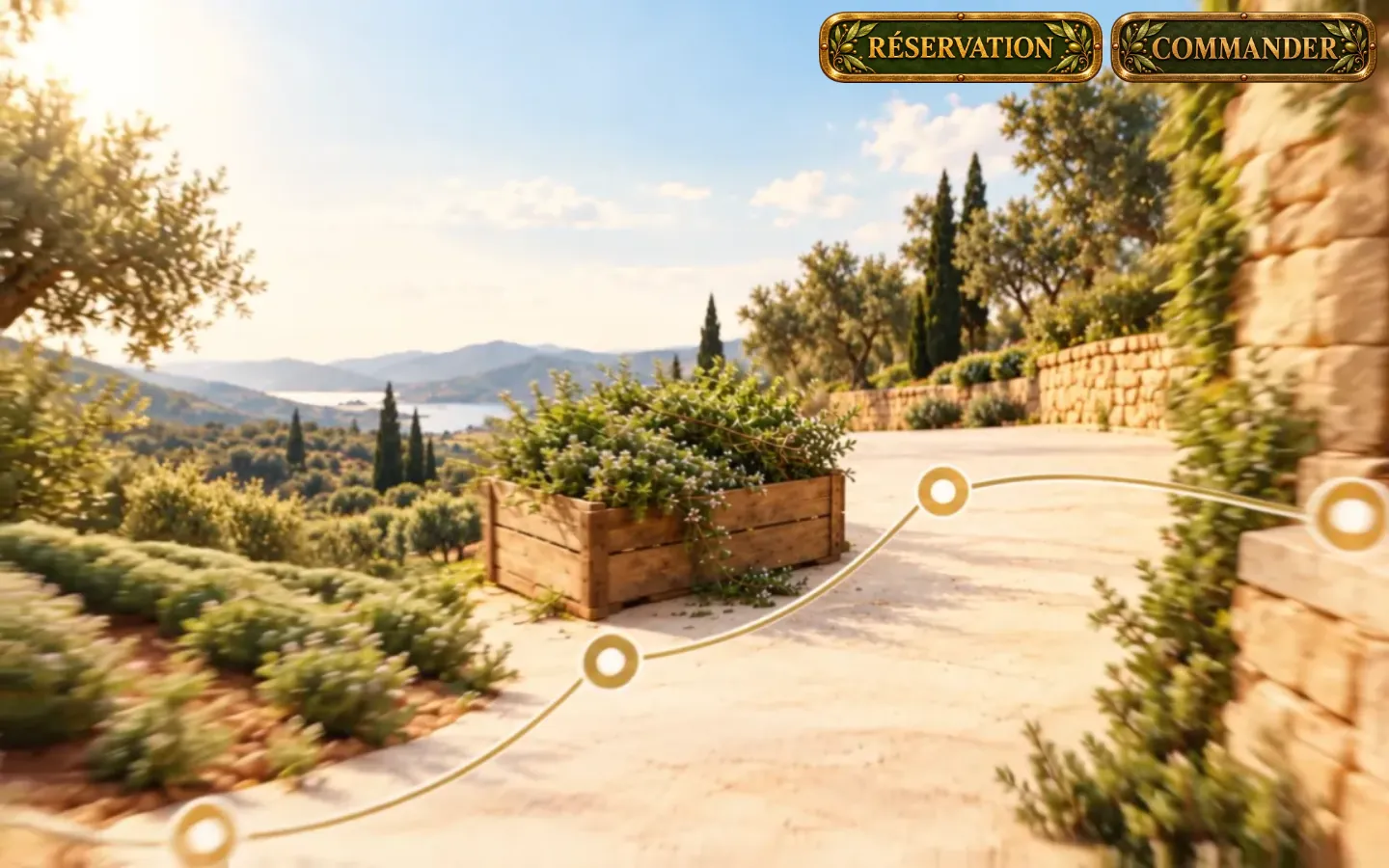
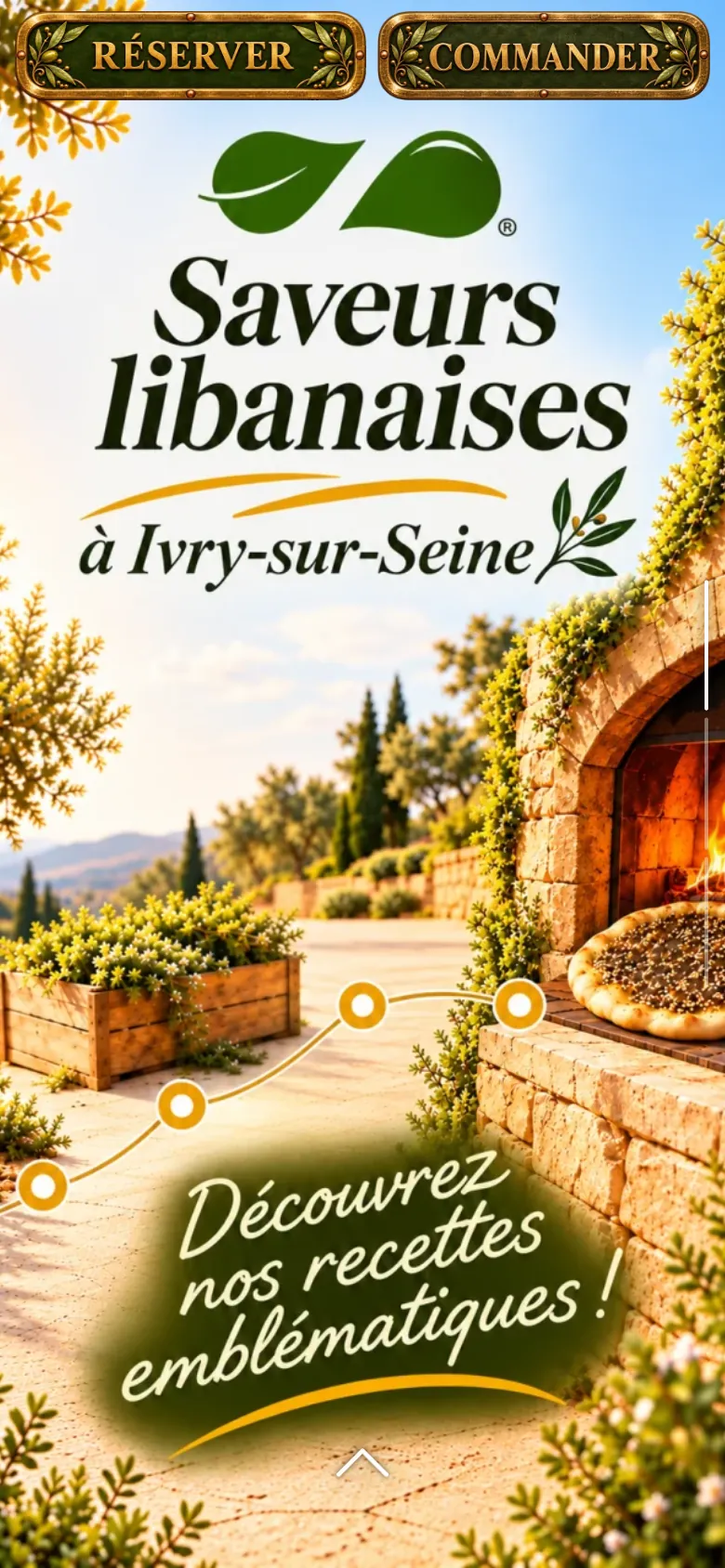
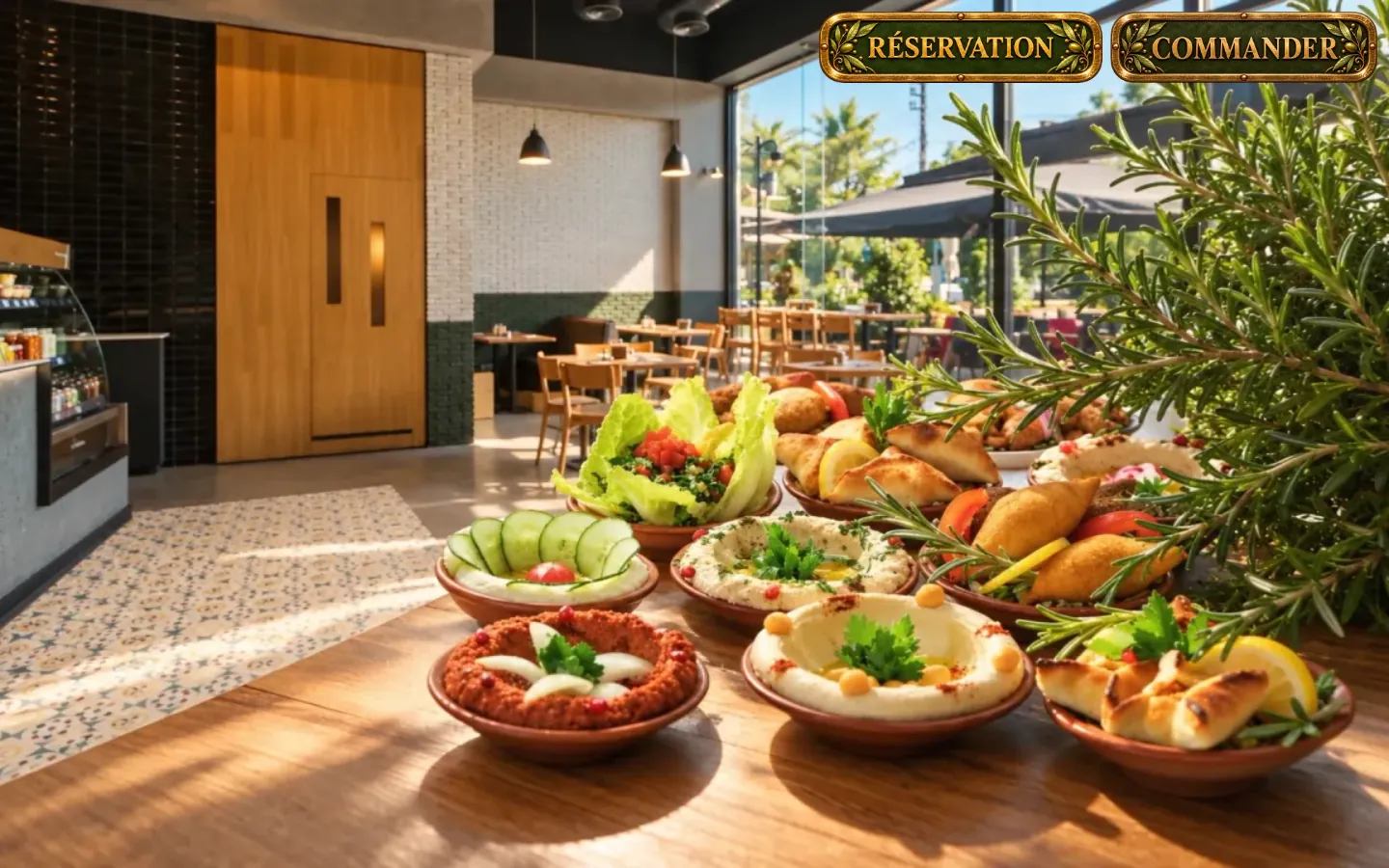
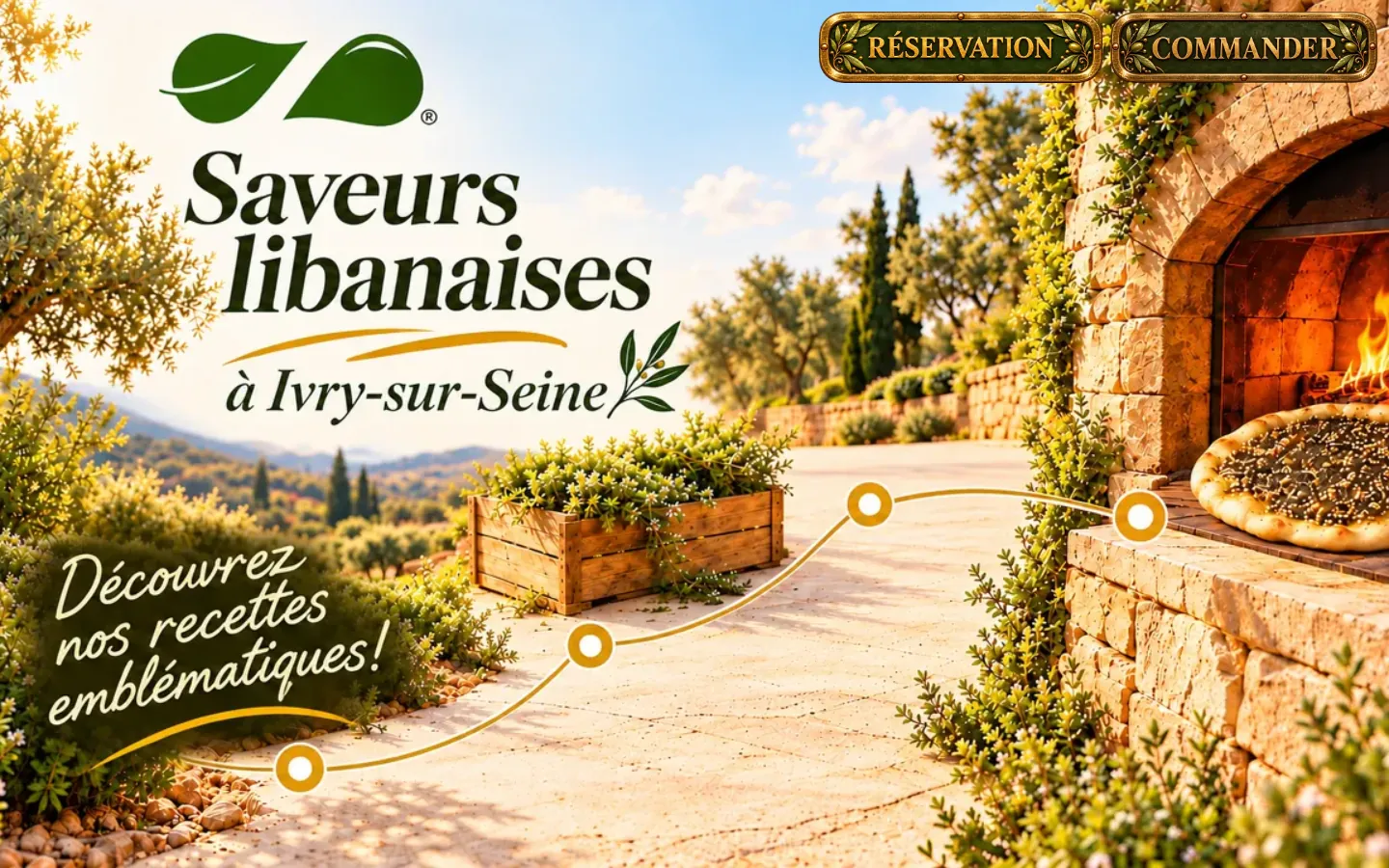
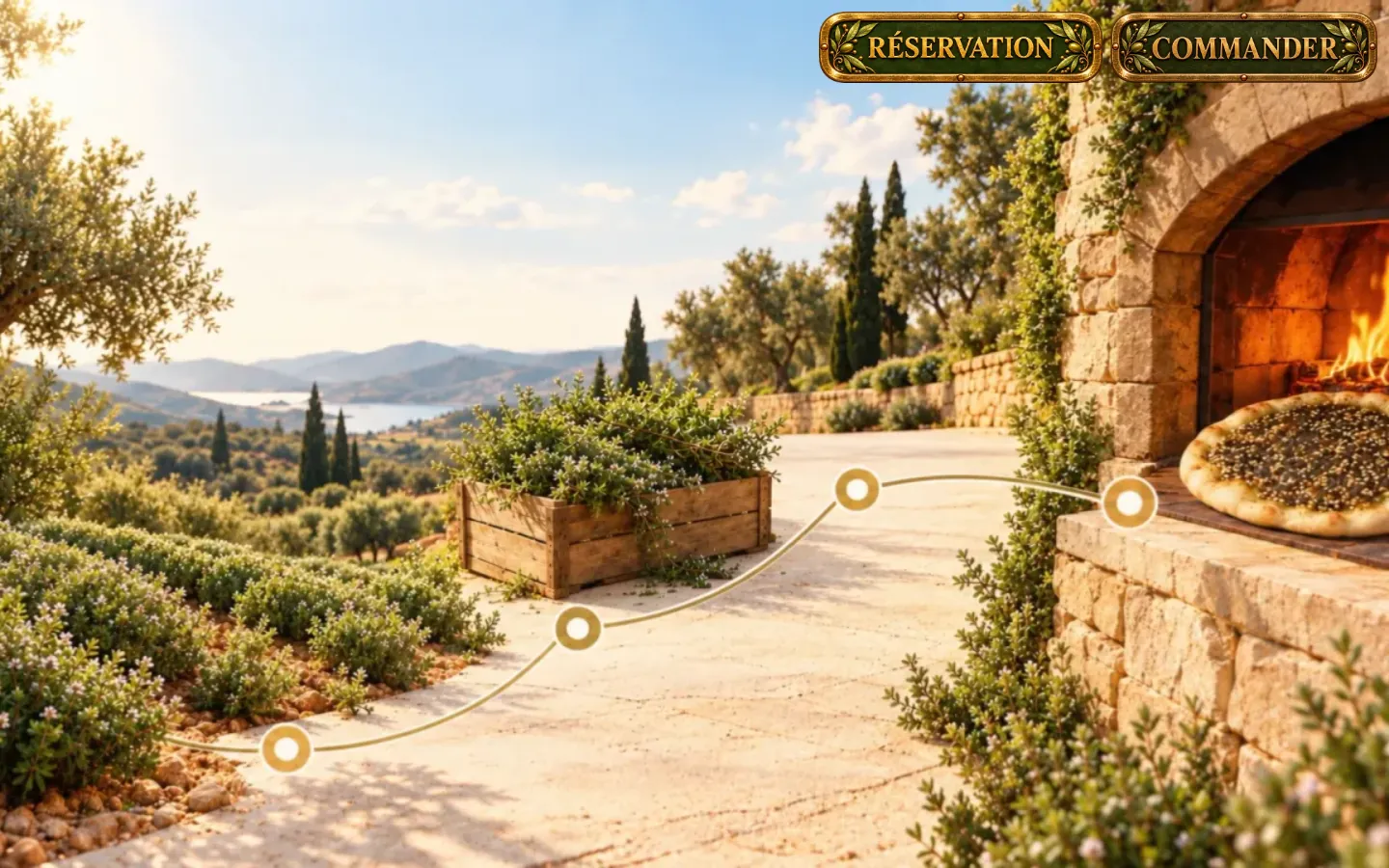
Two moods answer each other. The home page is sunny: a terrace paved in light stone, cypresses and olive trees, hills sloping down to a bay, wooden crates overflowing with flowering thyme, and a stone oven where a flatbread covered in zaatar is baking. Further down, a bright dining room with large bay windows hosts a table of mezze in terracotta bowls: hummus, moutabal, tabbouleh in lettuce leaves, golden meatballs and pastries, lemon and rosemary.
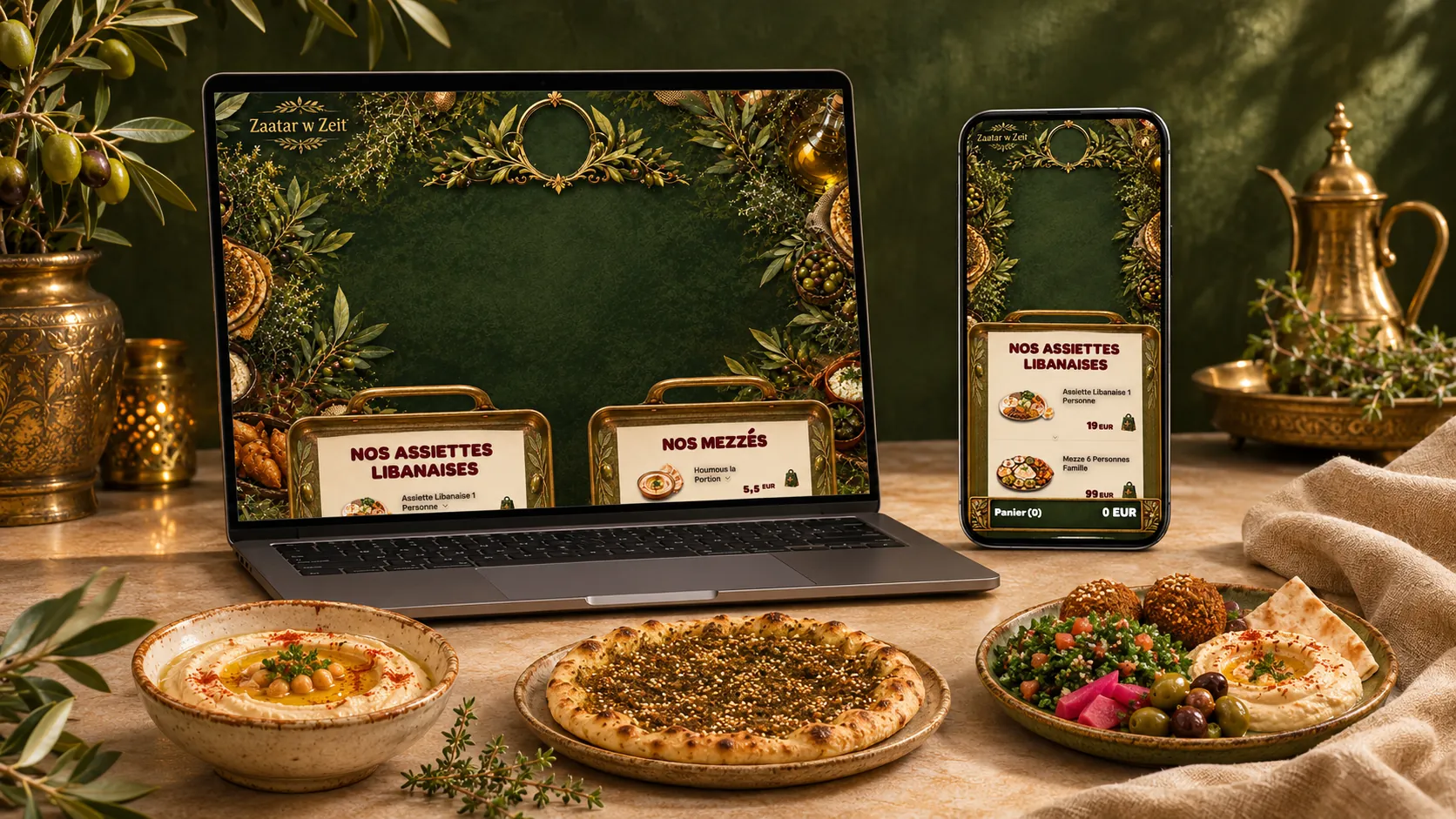
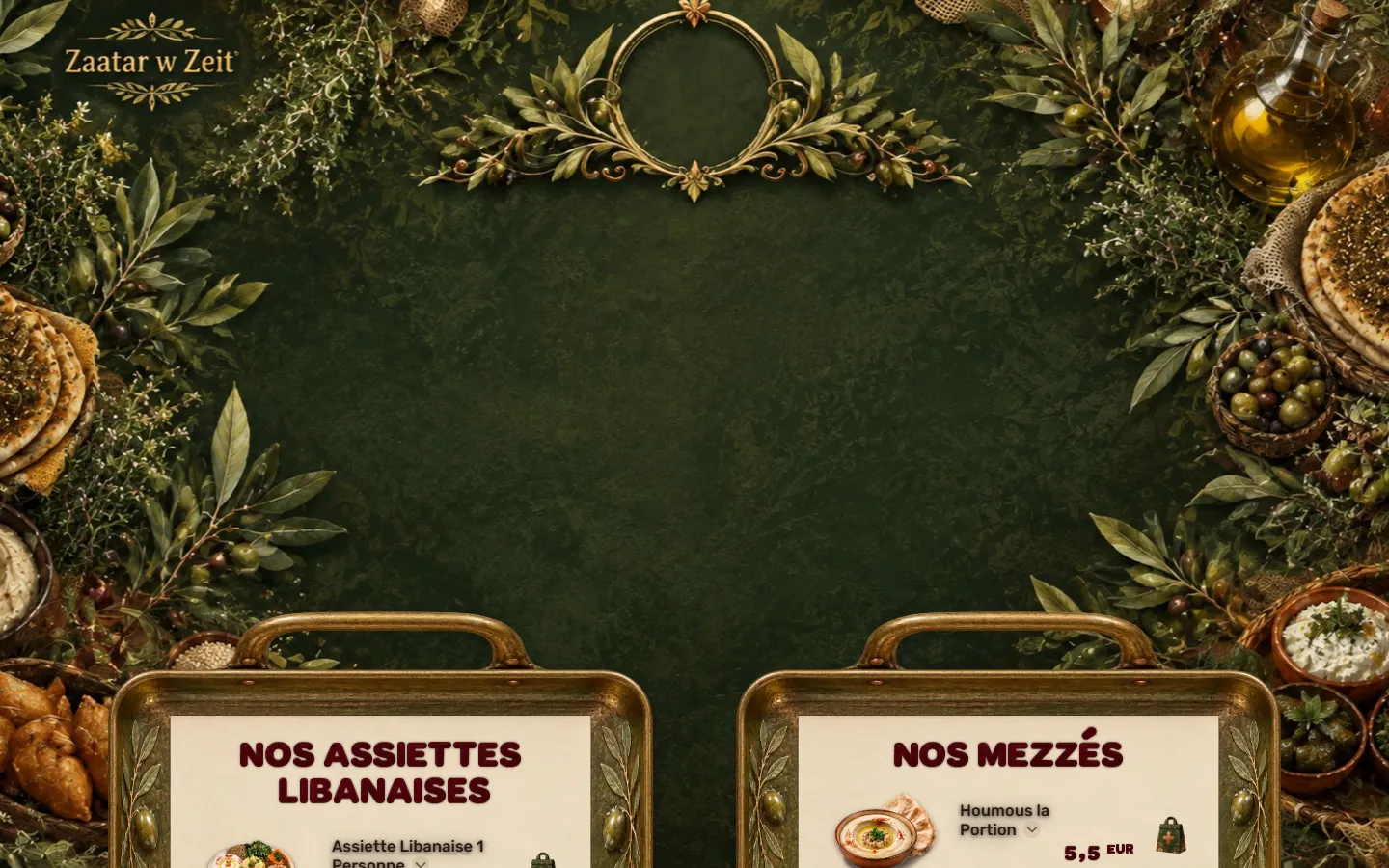
The ordering page turns deep green, like an olive leaf: a textured background surrounded by olive branches, bowls of olives, zaatar breads, pastries, labneh and a carafe of oil, beneath a golden laurel wreath. The home page titles are set in a dense, black, italic serif, underlined with a golden stroke; those of the menu in burgundy capitals on cream paper.
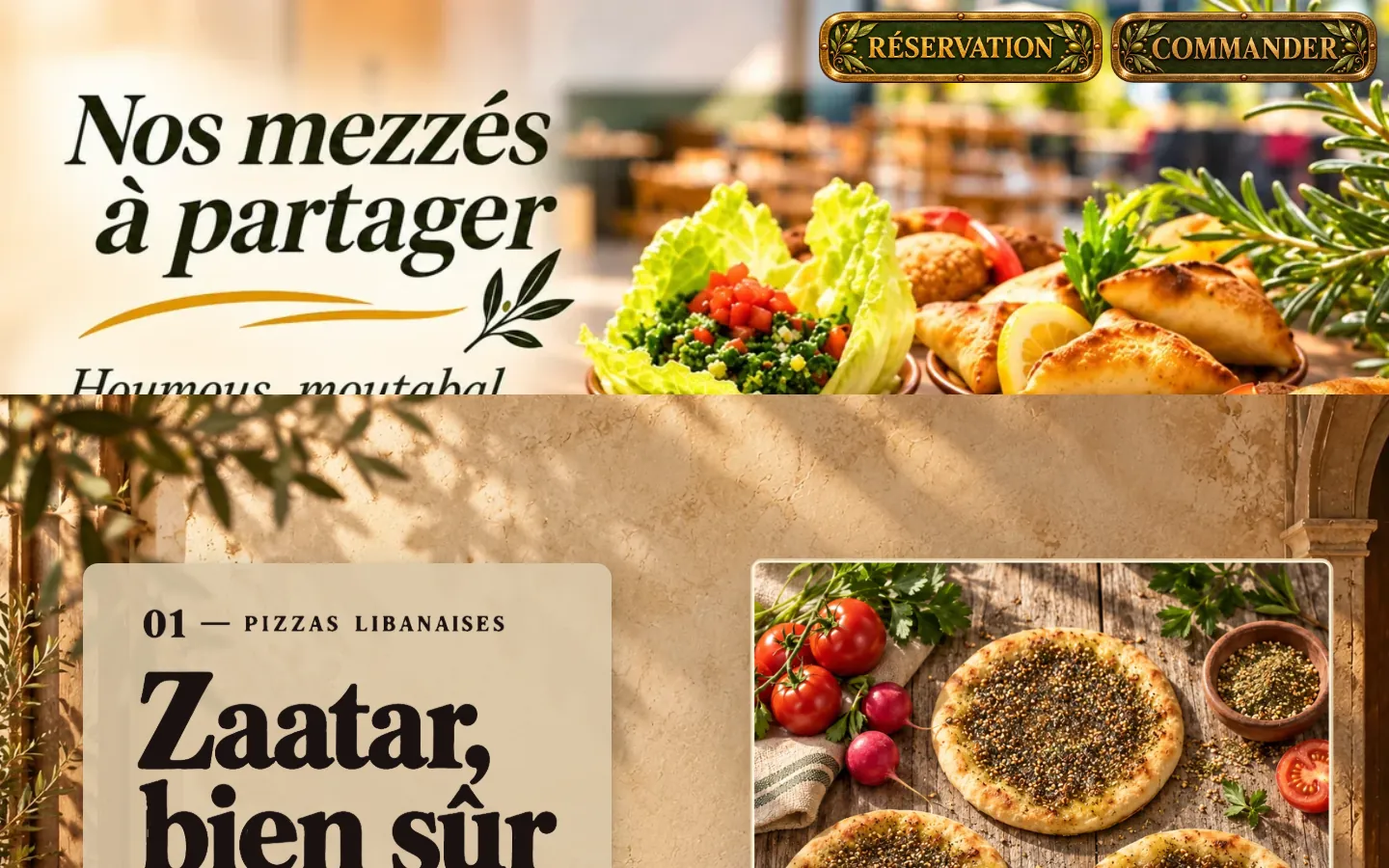
The Réservation and Commander buttons are painted in the world of the place: olive-green plaques ringed in brass, with golden letters, framed by olive sprigs. The add buttons take the shape of small green bags marked with a cross.

A film that moves forward as you scroll
 A film that moves forward as you scroll
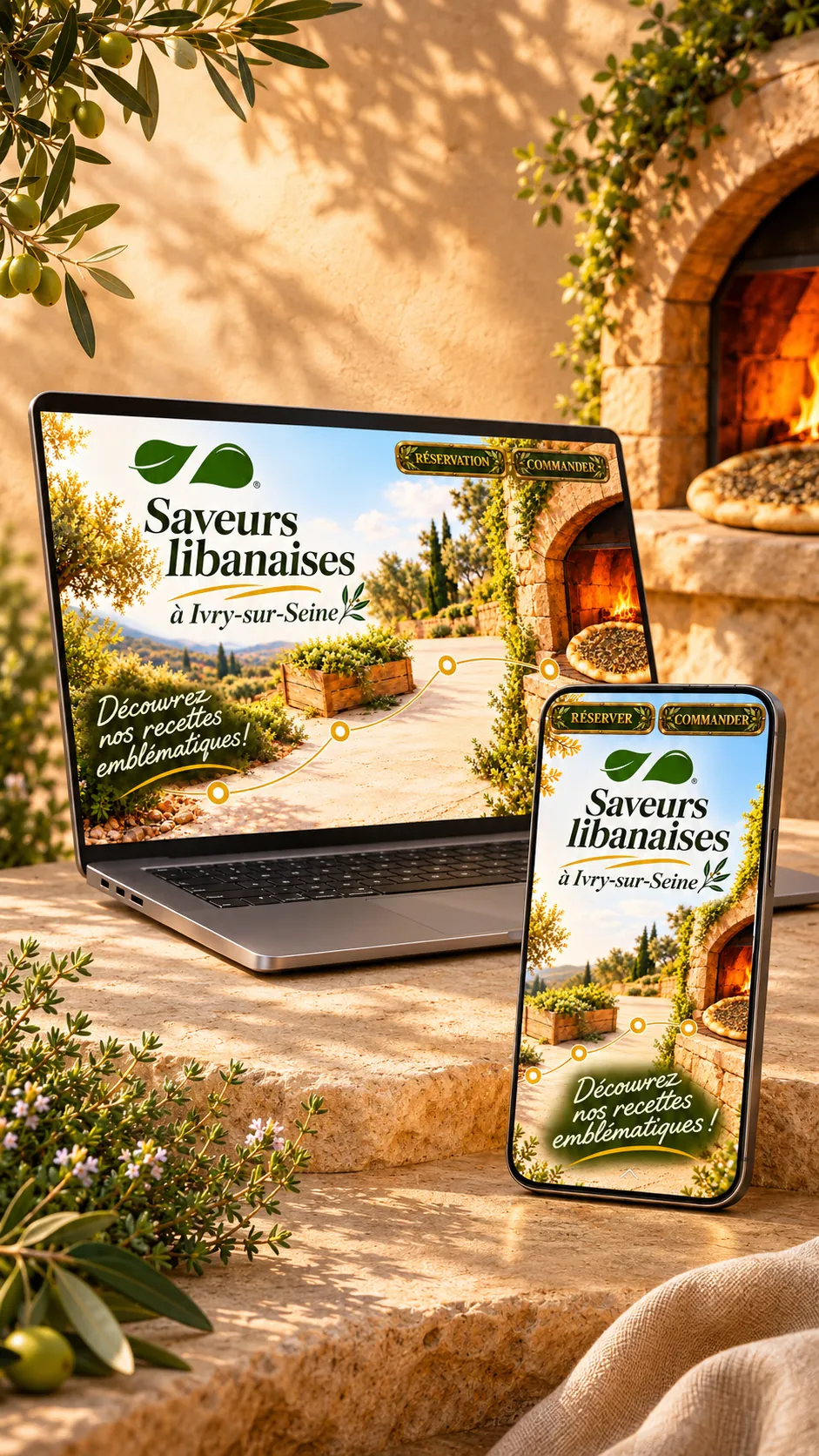
The home page is a film that moves forward as you scroll. It opens on the sunlit terrace, under the title “Saveurs libanaises à Ivry-sur-Seine” and the invitation “Découvrez nos recettes emblématiques !”. A golden path, dotted with markers, runs over the slabs to the oven where a manakish is browning; each gesture moves the camera along the terrace.
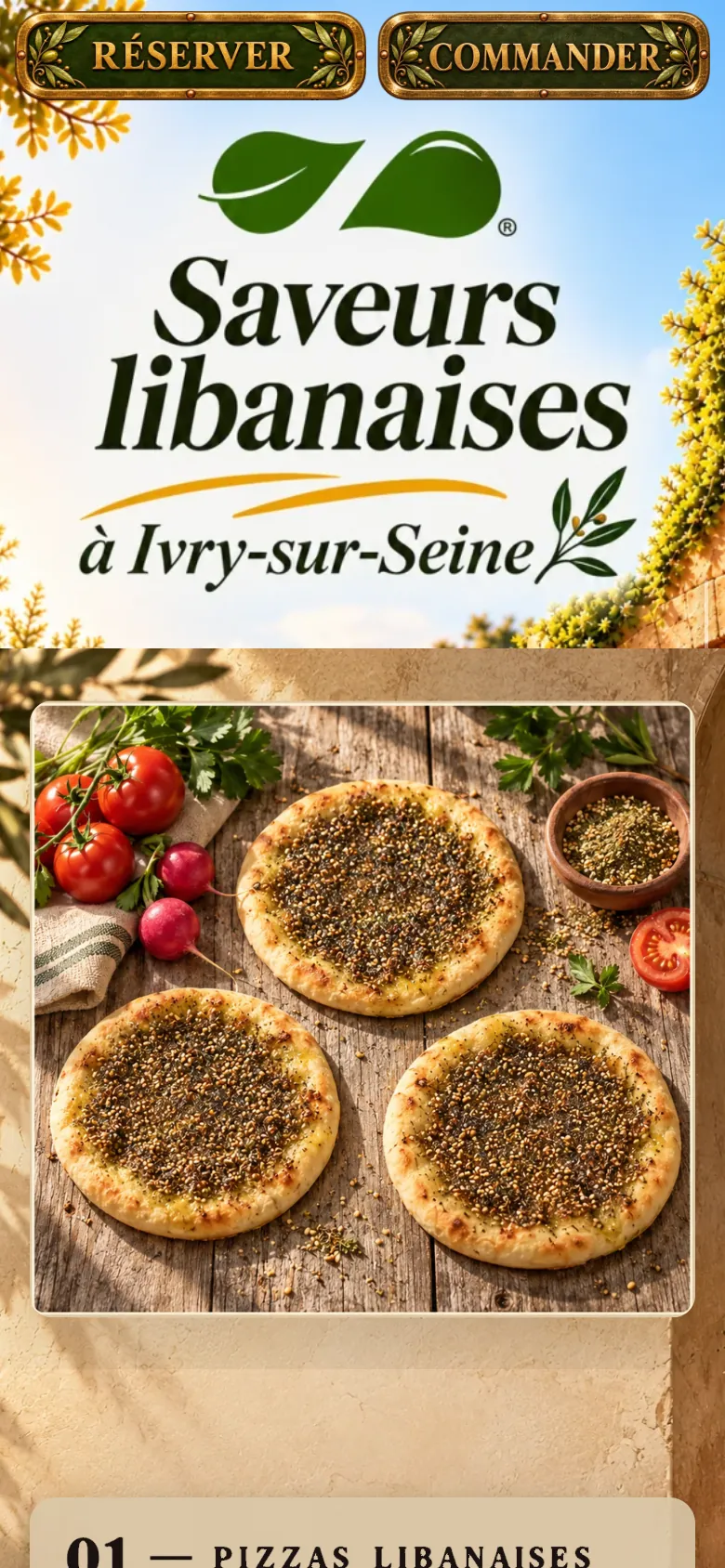
The film then enters the dining room, up to the table of mezze, and the story takes over: “Nos mezzés à partager”, then a chapter devoted to Lebanese pizzas, titled “Zaatar, bien sûr”, next to flatbreads sprinkled with zaatar, tomatoes and radishes laid on a wooden table.
An online menu for takeaway ordering
 An online menu for takeaway ordering
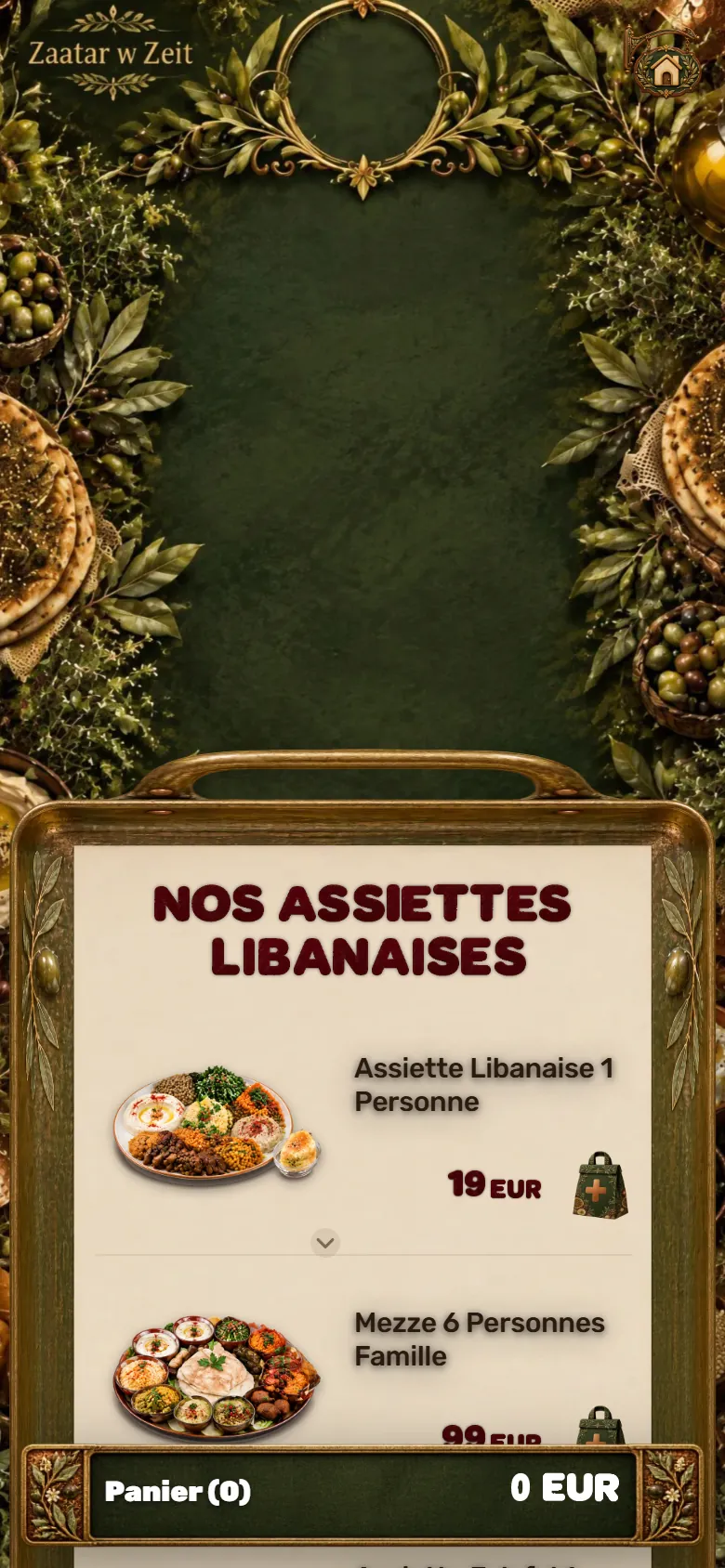
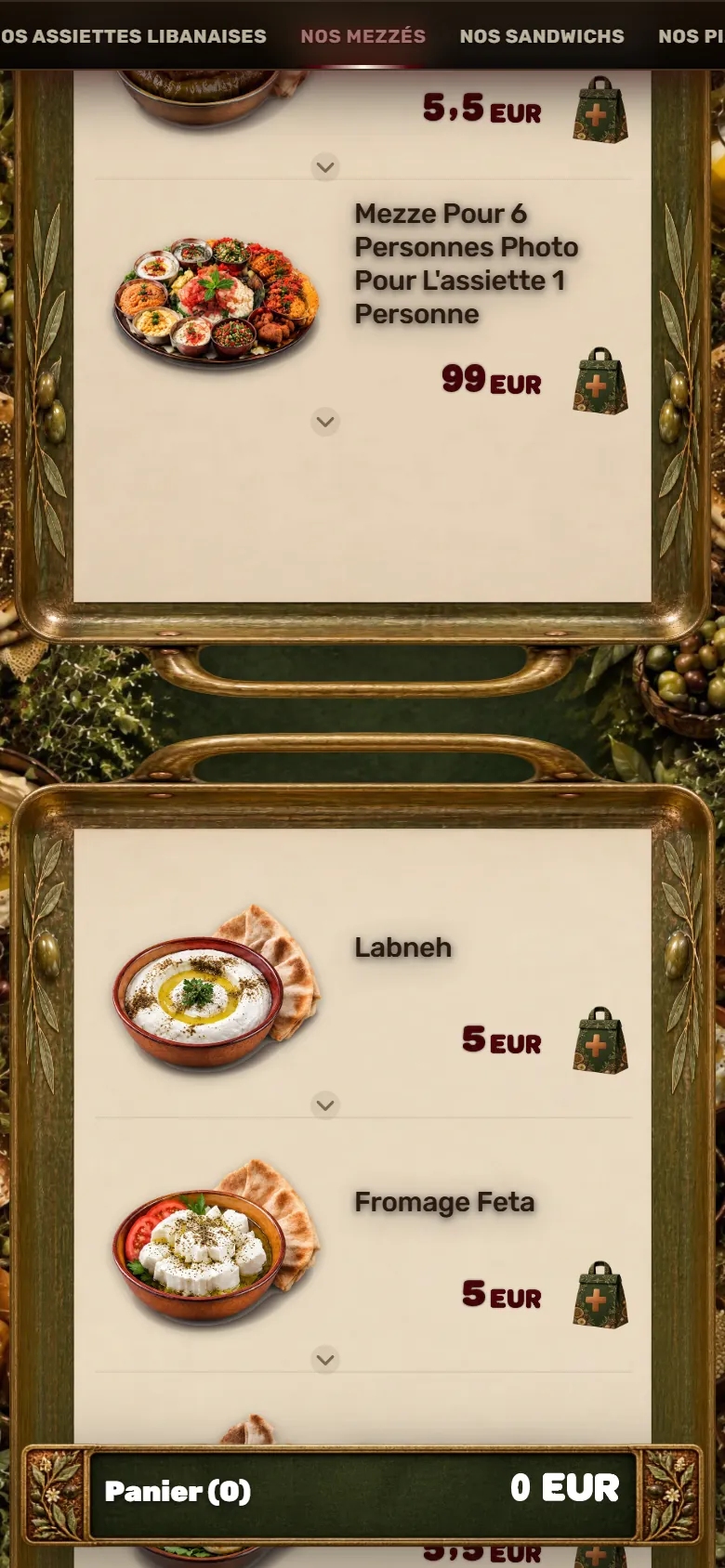
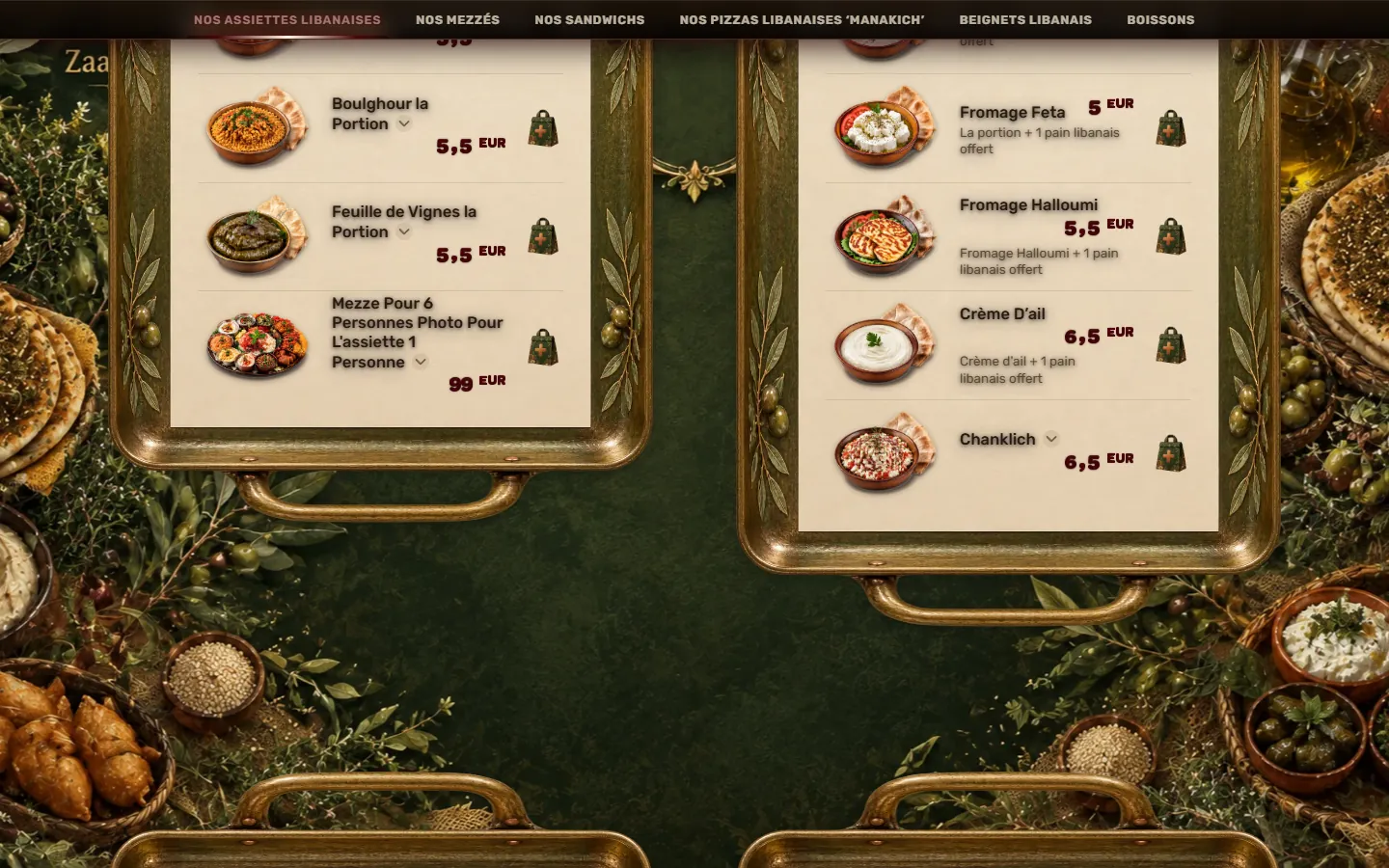
On the ordering page, each category is presented on a brass tray with handles, chiseled with olive leaves, carrying a sheet of cream paper. On a computer, the trays come in pairs. A bar fixed at the top of the screen lists the categories — Lebanese plates, mezze, sandwiches, Lebanese pizzas “manakich”, Lebanese pastries, drinks — and underlines the one you are viewing.
Each dish appears with its image, its name, its price and sometimes its description, like that of the halloumi cheese or the garlic cream. The customer adds dishes to the basket, then sends the order to the restaurant to collect it on site.
Zaatar w zeit's menu: a few dishes
 Zaatar w zeit's menu: a few dishes
Dishes as they appear on Zaatar w zeit's online menu, with the restaurant's own names, descriptions and prices.
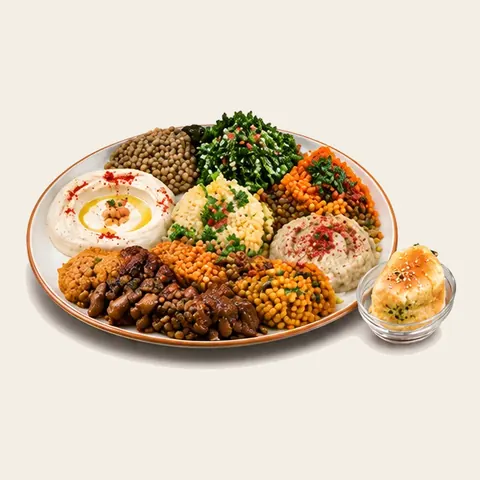 Nos Assiettes Libanaises
Assiette Libanaise 1 Personne
Houmous + moutabal + bourghoul + moudardara + taboulé + moussaka - 3 beignets (beignet libanais à base viande, fromage et légume) - dessert - 1 boisson au choix - 1 pain libanais (existe aussi en Assiette Kefta, Falafel ou Chich Taouk - voir nos assiettes)
€19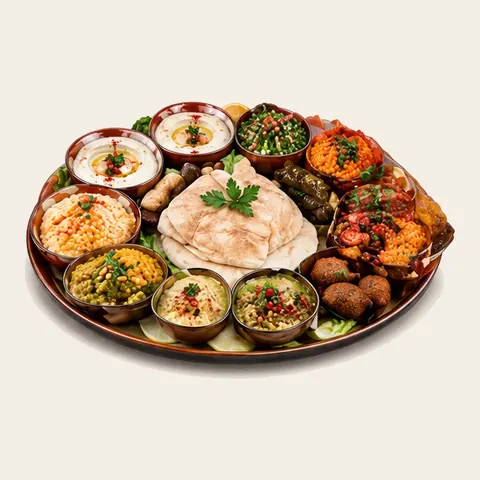 Nos Assiettes Libanaises
Mezze 6 Personnes Famille
Hummus + moutabal + bourghoul + moudardara + tabboule + moussaka - 18 beignets (beignet libanais à base viande, fromage et légumes) - séléction de 6 desserts - 6 boissons - 2 paquets de pain.
€99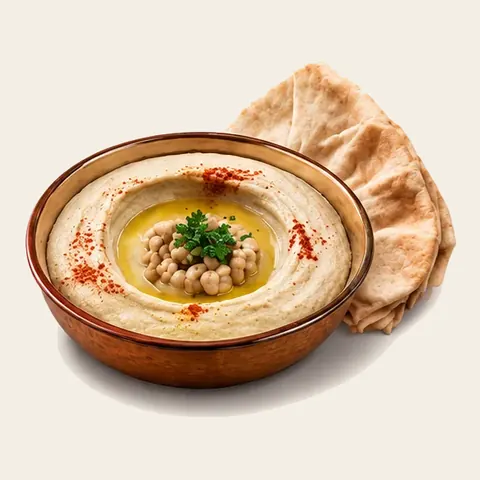 Nos Mezzés
Houmous la Portion
Purée de pois chiche et sauce tahiné + 1 pain libanais offert
€5.50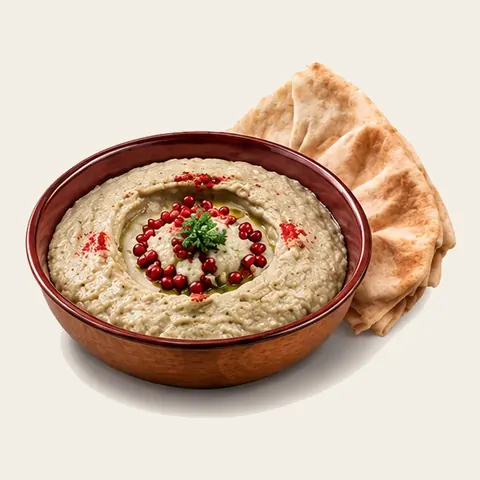 Nos Mezzés
Moutabal Baba Ghanouj la Portion
Purée d’aubergine et assaisonnement + 1 pain libanais offert
€5.50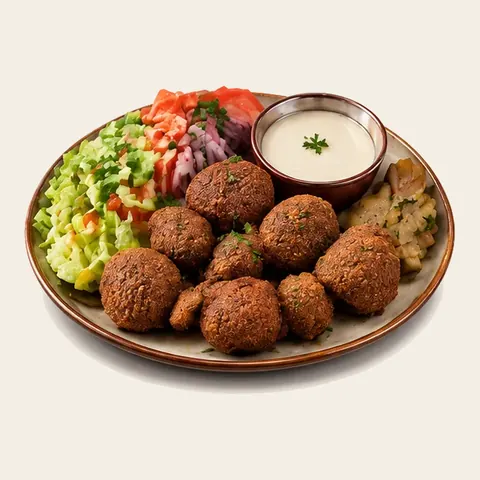 Nos Sandwichs
Falafel
Boulettes de pois chiche, salade, tomates et sauce tahini.
€7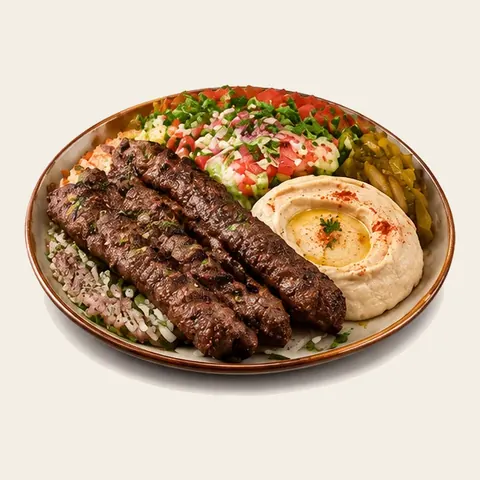 Nos Sandwichs
Kefta
Viande hachée, persil, oignons, houmous et salade.
€8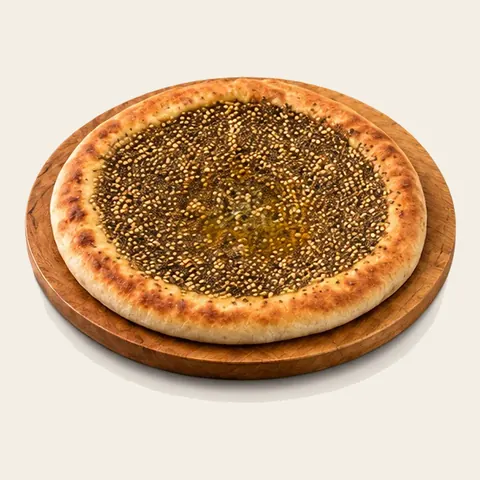 Nos Pizzas Libanaises ‘manakich’
Zaatar
Thym, huile d'olive et sésame.
€5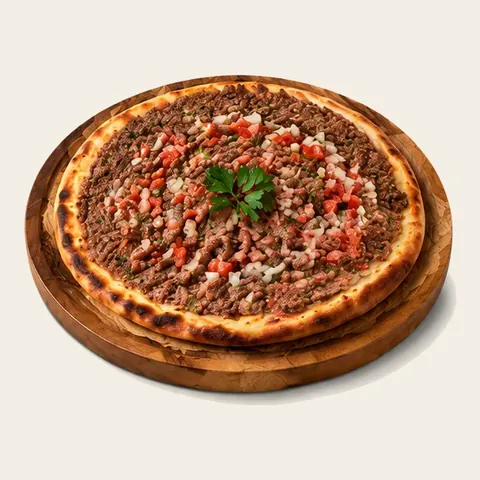 Nos Pizzas Libanaises ‘manakich’
Viande 'lahme Bel Ajin’
Viande de bœuf, tomates et oignons.
€5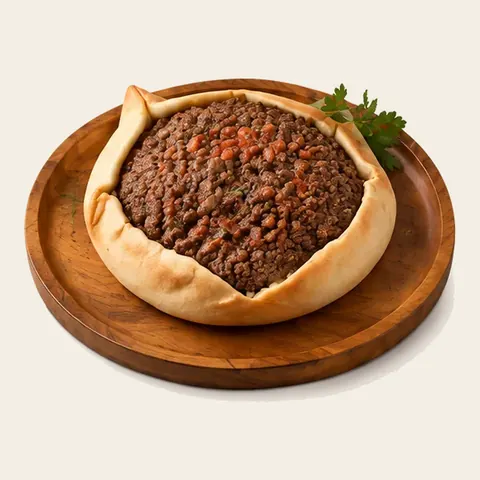 Beignets Libanais
Safiha à la Viande la Pièce
La pièce. Viande hachée de bœuf, oignons, tomates et sept épices, le tout grillé au four.
€2.50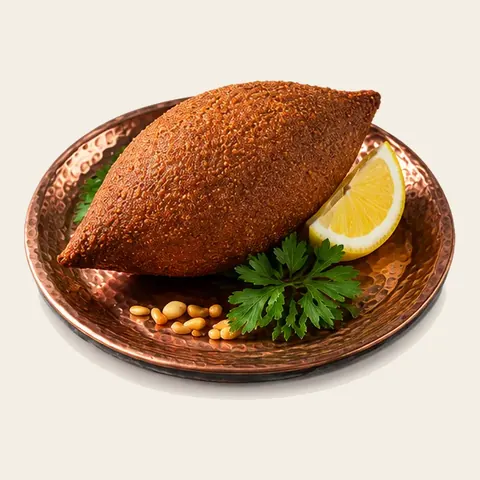 Beignets Libanais
Kebbé à la Viande la Pièce
La pièce. Viande hachée de bœuf, oignons, pignon, huile et sept épices et boulgour (blé concassé).
€2- Boissons
Coca-Cola Canette 33cl
€2 - Boissons
Coca-Cola Zéro Canette 33cl
€2

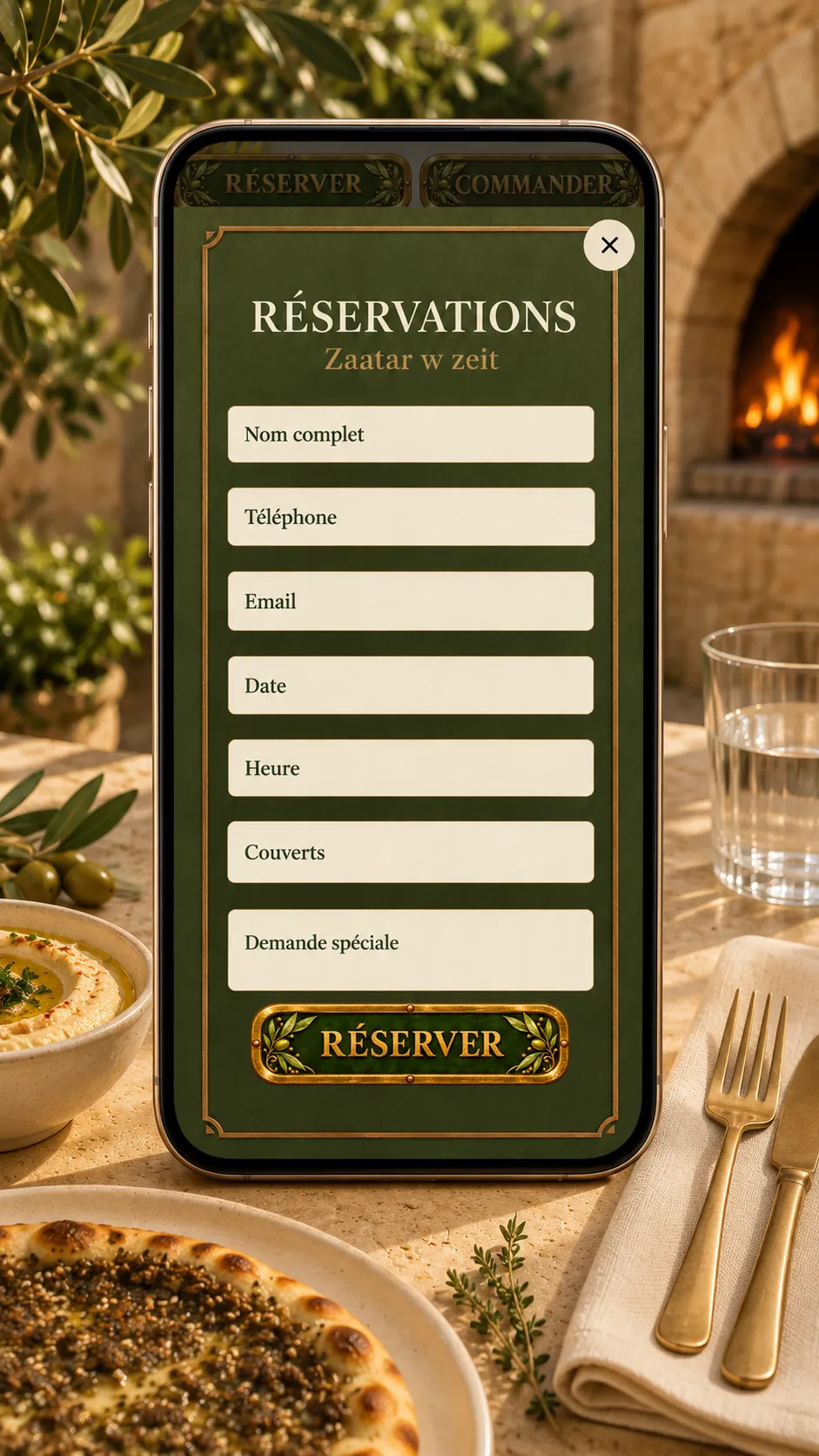
Booking a table on an olive-green board
 Booking a table on an olive-green board
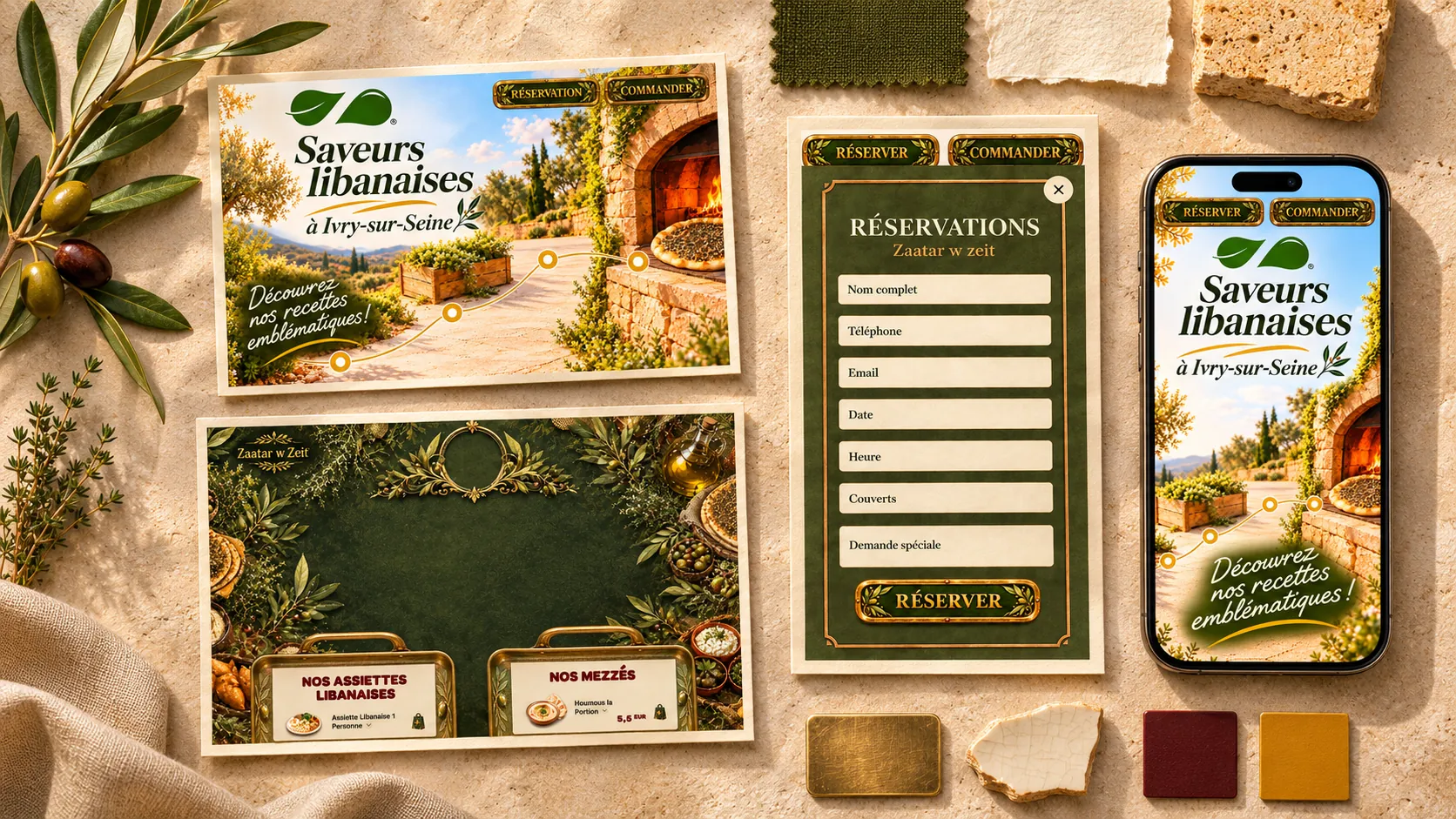
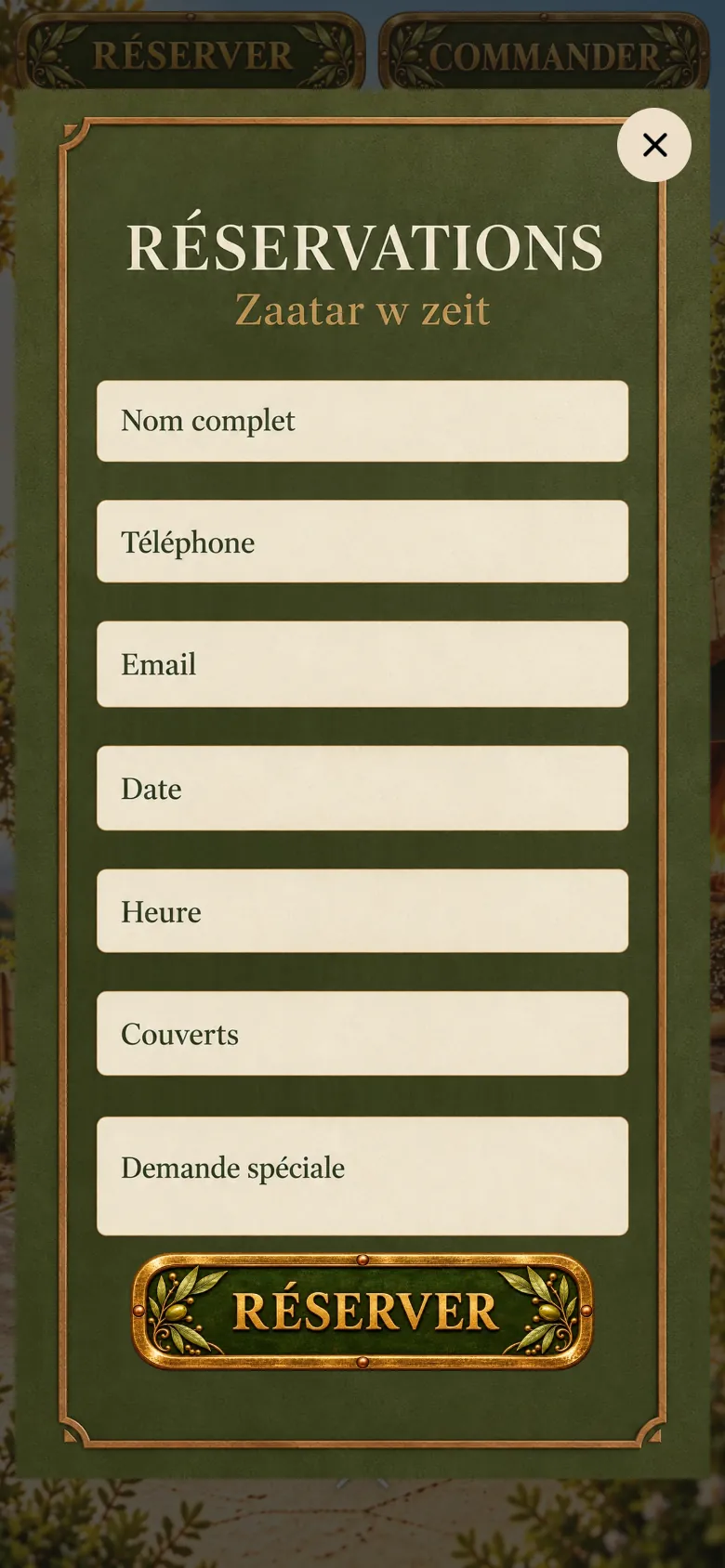
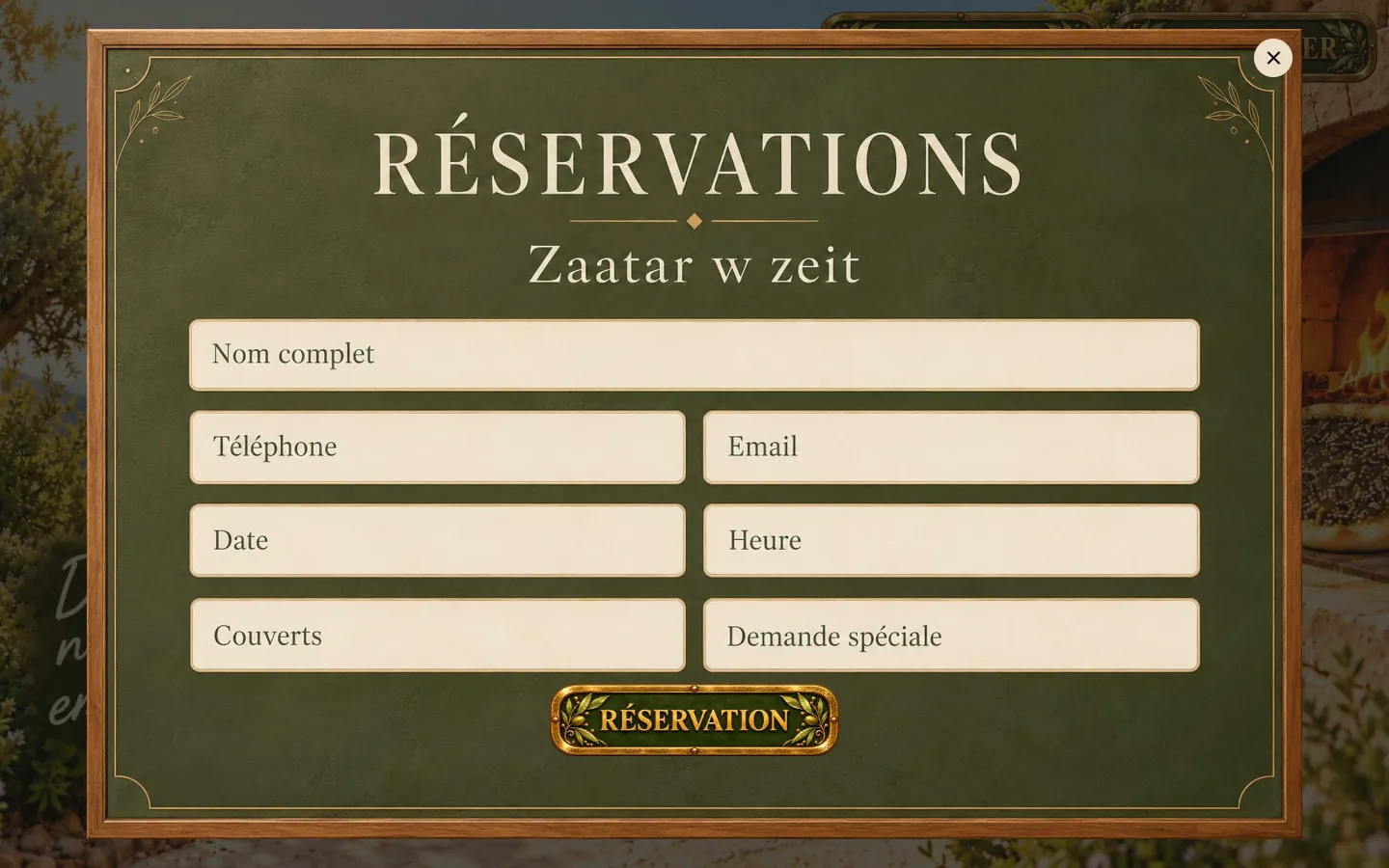
The Réservation button opens a form painted in the colors of the place: an olive-green board framed in wood, decorated with fine golden sprigs in the corners, titled “Réservations” above the restaurant name. It fits on a single screen and asks for the essentials: full name, phone, e-mail, date, time, number of guests and special request.
The fields stand out in cream against the green, and the send button takes up the brass-ringed plaque with olive sprigs of the buttons at the top of the page. The request goes straight to the restaurant, from its own website.
On a smartphone, the terrace in portrait
 On a smartphone, the terrace in portrait
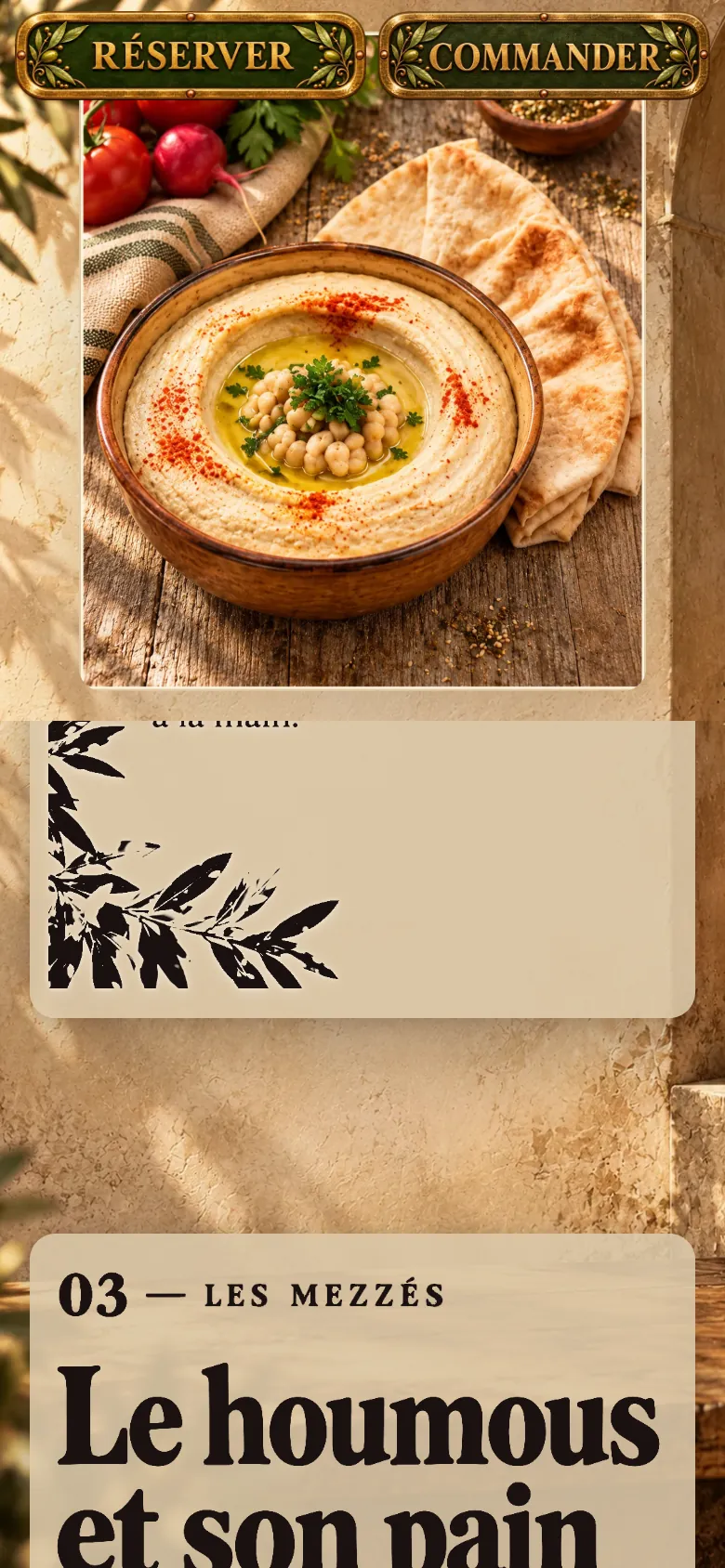
On a smartphone, the “Réserver” and “Commander” buttons sit side by side at the top of the screen. The title “Saveurs libanaises” takes up the top of the terrace, the oven and its flatbread settle on the right, and the invitation to discover the recipes sits at the bottom, on a green medallion.
The ordering page keeps its olive decor and its brass trays, which take the full width; the basket bar, framed with sprigs, stays pinned at the bottom of the screen. The booking form stacks its fields one under the other, down to the “Réserver” button.

A website prepared for local searches
 A website prepared for local searches
The website is built around what people really search for: a Lebanese restaurant, mezze, hummus, a Lebanese plate, a cheese pizza, a vegetarian sandwich or a vegetarian restaurant, the Zaatar w zeit menu or the restaurant itself, by name. The page title, its description, its texts and its structured data present the restaurant, its district, its cuisine and its menu clearly.
A detailed presentation page complements the home page, and the full menu can be read as text on the ordering page. Nobody can guarantee a place on Google: the work consists of giving search engines accurate, structured and consistent information.
A website for a Lebanese restaurant in Ivry-sur-Seine: mezze, manakish and bookings
 A website for a Lebanese restaurant in Ivry-sur-Seine: mezze, manakish and bookings
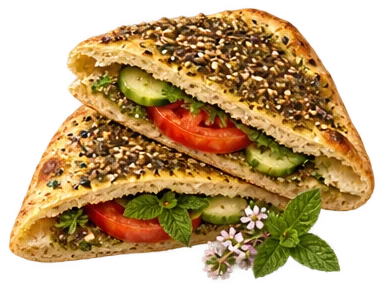
A Lebanese restaurant is made for sharing: hummus, moutabal, tabbouleh and falafel in the middle of the table, a Lebanese plate for one or a family mezze, zaatar manakish fresh from the oven. A Lebanese restaurant website has to show that generosity, tell plates, mezze by the portion, sandwiches and Lebanese pizzas apart, then offer takeaway mezze ordering and table booking, including for vegetarians hunting for their dish.
- The price of a mezze: no agency quote to swallow, and the family mezze taken away pays no commission.
- The time it takes to proof bread: the restaurant’s name is enough for the menu, visuals and ordering pages to be ready in minutes.
- Golden stone, olive, brass: a sunlit terrace and trays engraved with olive leaves, not a look borrowed from another Lebanese restaurant.
- The hummus, the portion, the price: the owner changes them himself, from the kibbeh to the drinks, and the site shows it instantly.
- From screen to oven: orders and bookings go straight to Zaatar w zeit, with no platform or agency.
- Ivry, Beirut, Sydney: the same software speaks several languages and shows the venue’s currency, for the diaspora as for the curious.
For a Lebanese restaurant in Ivry-sur-Seine, at the gates of Paris, that is a table online that opens with a whiff of thyme.
Dineora in numbers: 0% commission on your orders · a website live in 5 minutes.
Learn more: Restaurant website builder · Online ordering system for restaurants · Restaurant booking system · QR code menu for restaurants

The result: the light of Lebanon, the menu within reach
 The result: the light of Lebanon, the menu within reach
The Zaatar w zeit website first lets you feel a place: the warm stone, the thyme, the oven, the shared table. It then leads, without detour, to a menu served on brass trays, to takeaway ordering and to booking, on a smartphone as well as on a computer.


The website in pictures
 The website in pictures
Screenshots of the live website, on a computer and on a phone.
Zaatar w zeit: practical information
 Zaatar w zeit: practical information
- Address
- Zaatar w Zeit Paris, 100 Av. Danielle Casanova, 94200 Ivry-sur-Seine
See the address on Google Maps - Cuisine
- Lebanese: plates, mezze, manakish
- Services
- Online ordering for pickup · Online table booking
- Menu sections
- Nos Assiettes Libanaises · Nos Mezzés · Nos Sandwichs · Nos Pizzas Libanaises ‘manakich’ · Beignets Libanais · Boissons
- The restaurant's website
- dineora.io/zaatar-w-zeit-paris
 Menu sections
Questions about this project
 Questions about this project
Who designed the Zaatar w zeit website?
The Zaatar w zeit website was designed by Dineora: art direction, a home page that moves forward as you scroll, online menu, takeaway ordering page and booking form.
Can you order takeaway from Zaatar w zeit online?
Yes. The ordering page presents the whole menu, from the Lebanese plates to the manakish: you add your dishes to the basket, then send the order to collect it at the restaurant.
Can you book a table at Zaatar w zeit on its website?
Yes. The Réservation button, at the top of every page, opens a one-screen form: name, phone, e-mail, date, time, number of guests and special request.
How can a Lebanese restaurant offer its mezze for takeaway without a platform commission?
The menu and basket sit on the restaurant’s own site, and each order goes straight to the kitchen. No intermediary takes a share.
Does a Lebanese restaurant need an agency to show manakish, plates and mezze online?
No: the restaurant’s name is enough to get a menu sorted into sections, with booking. The owner then edits dishes and portions personally.
 Bass Ndiaye Dibi
 Black Beans
 Blackball
 Boyster
 Ô'Mezzo Sandwicherie
 Bar Tapas 177
